 Cosmetic, Implant and General Dentistry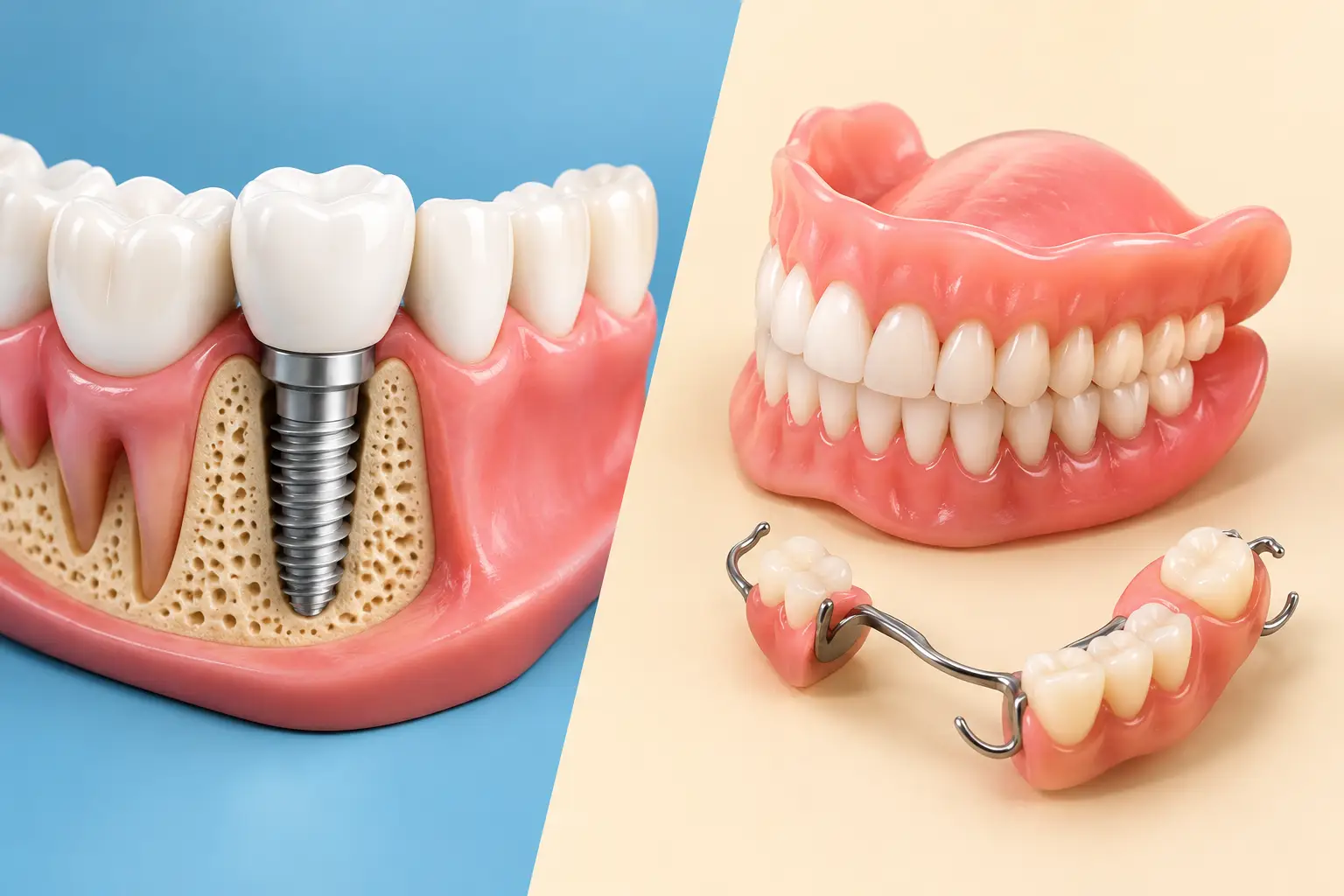
A missing tooth can change more than a smile. It may make eating feel awkward, affect the way you speak or leave you hiding your teeth in photographs. When considering implant versus denture treatment, the best choice is not simply about replacing a gap. It is about finding an option that feels comfortable, looks right for you and works within your long-term plans and budget.
Both dental implants and dentures can restore missing teeth beautifully. The right answer depends on how many teeth you have lost, the condition of your gums and jawbone, your lifestyle and how fixed you would like your new teeth to feel. A proper consultation gives you clear answers, without pressure or confusing jargon.
Implant versus denture: the main difference
A dental implant replaces the root of a missing tooth. A small titanium post is placed into the jawbone, where it gradually bonds with the bone. Once healed, it supports a custom-made crown, bridge or a full arch of teeth. The visible tooth is designed to blend with your natural smile in shape and colour.
A denture is a removable appliance that replaces one, several or all missing teeth. Modern dentures can look far more natural than many people expect, particularly when they are carefully made and fitted. They rest on the gums, although they can also be secured more firmly using implants.
The key distinction is stability. An implant-supported tooth is fixed in place and functions much like a natural tooth. A conventional denture is removed for cleaning and may move slightly during eating or speaking, especially while you are adapting to it.
When dental implants may be the better choice
For many patients, implants are the closest replacement to having natural teeth again. Because they are anchored in the jaw, they do not cover the roof of the mouth or rely on neighbouring teeth for support. This can make a real difference to comfort, speech and confidence.
An individual implant and crown is often an excellent option for a single missing tooth. Unlike a conventional bridge, it does not require the teeth either side of the gap to be filed down. For several missing teeth, implants can support a bridge. For patients with no teeth, a small number of implants can stabilise a full denture, or support a fixed full-arch restoration where suitable.
Implants also help preserve the jawbone. After a tooth is lost, the bone in that area naturally begins to shrink because it is no longer being stimulated by a tooth root. Over time, this can alter facial support and make a denture less secure. An implant transfers chewing forces into the jawbone, helping to maintain it.
There is a commitment involved. Implant treatment takes time because the bone needs to heal around the implant before the final tooth is fitted. Some cases also need preparatory treatment, such as gum care, a bone graft or removal of an unhealthy tooth. Good daily cleaning and regular dental reviews are essential for long-term success.
When dentures can be the right solution
Dentures remain a valuable treatment, particularly when several teeth are missing or when a patient would prefer a less surgical route. They can be made relatively quickly after extractions, allowing you to avoid being left with visible gaps while the mouth heals.
They are also usually the lower upfront-cost option. That matters, particularly where a number of teeth need replacing. A well-made denture can restore facial support, improve the appearance of your smile and make it easier to enjoy a wider range of foods than with missing teeth.
However, dentures do require an adjustment period. New dentures may initially feel bulky, and it takes practice to speak and chew comfortably. The gums and jaw change shape over time, so dentures can become loose and may need adjustment, relining or replacement. Adhesive can help in some circumstances, but it does not solve every fit issue.
For patients who dislike the thought of a loose lower denture, implant-retained dentures offer a practical middle ground. The denture still comes out for cleaning, but it clips securely onto implants. This usually improves stability dramatically without the cost of a fully fixed implant bridge.
Comfort, appearance and everyday confidence
The practical differences are often easiest to understand at mealtimes. An implant-supported crown or bridge is fixed, so you brush it in place and eat with it much as you would with natural teeth. There are still sensible precautions – no restoration is indestructible – but many patients find that they can return to foods they had been avoiding.
With dentures, eating is possible and often very comfortable once you are used to them, but softer foods may feel easier at first. Very hard, sticky or chewy foods can be more challenging. A denture may also shift when biting into an apple or crusty roll, depending on its fit and the shape of the jaw.
Appearance should never be treated as an afterthought. Whether you choose an implant crown, bridge or denture, the aim should be a smile that suits your face rather than a generic set of teeth. Tooth shade, length, proportion and gum appearance all matter. A natural-looking result is often created through careful planning, not by choosing the brightest possible white.
Cost: look at the long-term picture
The cost comparison between implants and dentures is not always straightforward. Dentures generally cost less initially, while implants involve surgical treatment, high-quality components and several clinical stages. This makes implants the larger initial investment.
Yet value is more than the first figure on a treatment plan. A well-maintained implant can be a long-lasting replacement, although the crown or bridge may eventually need maintenance or replacement. Dentures can also last well when cared for, but they commonly need relining or renewal as the mouth changes.
The most useful question is not, “Which is cheapest?” It is, “Which option is likely to meet my needs comfortably over the coming years?” A clear treatment plan should explain the fees, expected stages, alternatives and any likely future maintenance. If you are considering extensive work, asking about finance options may also make a staged plan more manageable.
Who is suitable for implants?
Many adults are suitable for dental implants, including those who have worn dentures for years. Suitability is based on a clinical assessment rather than age alone. Your dentist will assess the health of your gums, the amount of available bone, your bite, medical history and oral hygiene.
Smoking, uncontrolled diabetes and active gum disease can increase the risks around implant healing and long-term health. They do not automatically rule treatment out, but they need an honest conversation and, in some cases, treatment first. If there is not enough bone, grafting may be possible, although this adds time and cost.
Dentures may be the better choice when surgery is not appropriate, when treatment needs to be completed sooner, or when a removable solution better suits your budget and priorities. Choosing dentures is not settling for less. It is about selecting a treatment that works reliably for your circumstances.
Looking after your new teeth
Implants need the same standard of daily care as natural teeth: brush twice a day, clean between teeth or around the implant with the recommended tools, and attend regular hygiene and dental appointments. Gum inflammation around implants can lead to serious problems if ignored, so professional monitoring matters.
Dentures should be removed and cleaned daily with a soft denture brush and suitable cleaner. They should not be cleaned with abrasive toothpaste, which can scratch the surface. It is also important to clean your gums, tongue and any remaining natural teeth, and to give the gums a rest overnight unless you have been advised otherwise.
A decision that should feel clear, not rushed
At U Smile Dental, the starting point is understanding what you want to change: a single visible gap, a loose lower denture, difficulty eating or a smile that no longer feels like you. A consultation can set out the realistic options, including implants, conventional dentures and implant-retained dentures, with straightforward guidance on comfort, timing and costs.
The best replacement is the one you can wear, eat and smile with confidence. Take the time to ask questions, see what is possible for your mouth and choose a plan that feels right for your life as well as your smile.