 Cosmetic, Implant and General Dentistry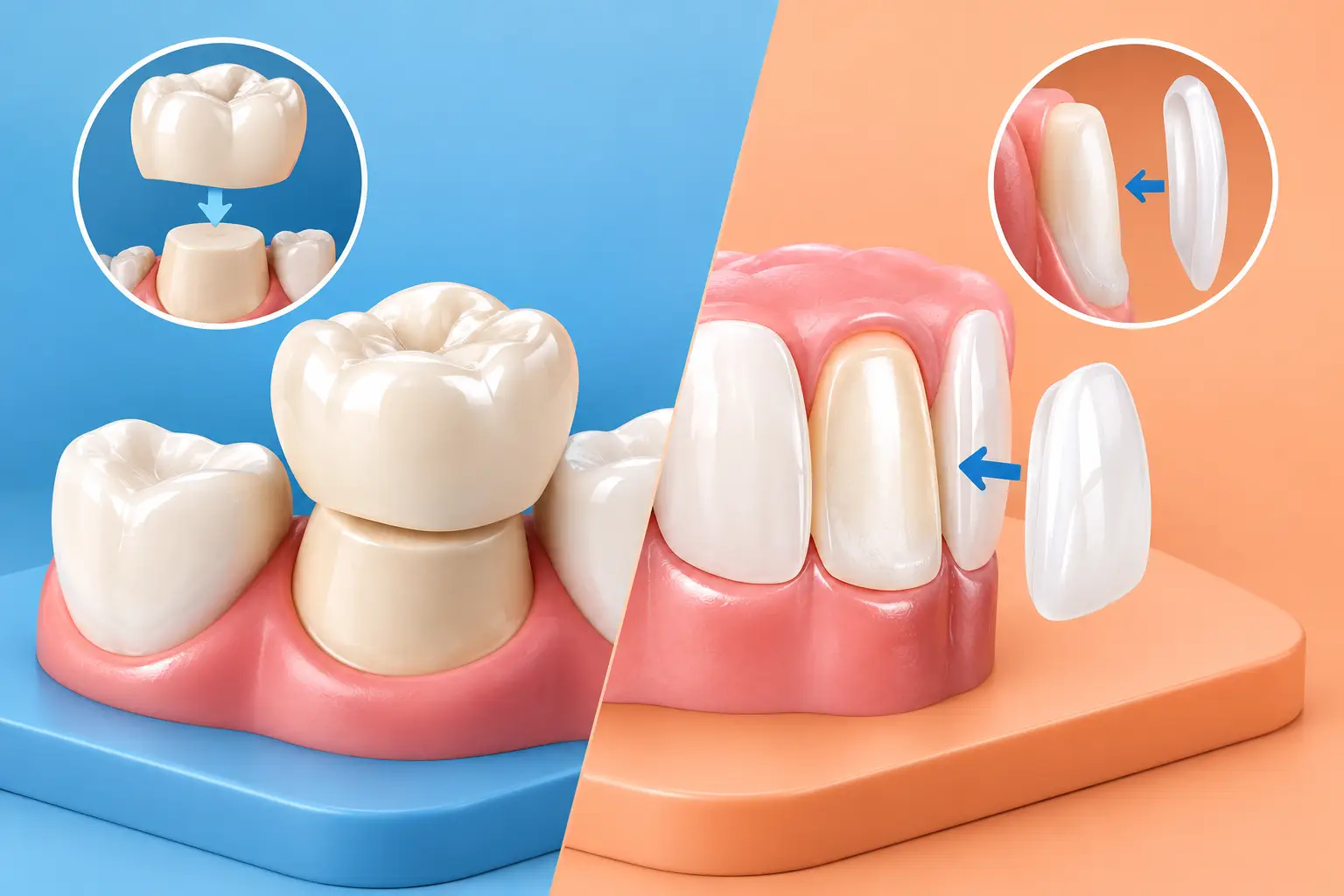
A chipped front tooth can make you avoid photographs. A large old filling can leave you worrying every time you bite into something firm. In both situations, the question of crown versus veneer often comes up, but the best answer is not simply about which option looks better. It depends on how much healthy tooth remains, what has caused the damage and what you need the tooth to do every day.
Both treatments can create a natural-looking, confident smile. However, they work in very different ways. A veneer is usually chosen to improve the visible front surface of a tooth, while a crown is designed to cover and protect the whole tooth. A careful clinical assessment makes sure your treatment looks attractive and has the strength to last.
Crown versus veneer: the main difference
A porcelain veneer is a fine custom-made shell bonded to the front of a tooth. It is most commonly used on front teeth where appearance is the priority. Veneers can improve the colour, shape, size or alignment of teeth, helping to create a brighter and more even smile without orthodontic treatment in some suitable cases.
A dental crown, sometimes called a cap, covers the entire visible portion of a tooth above the gum line. It is used when a tooth needs more than a cosmetic improvement. A crown can restore a tooth weakened by a large filling, fracture, decay, root canal treatment or wear. Modern porcelain crowns can be matched carefully to surrounding teeth, so strength does not have to mean a noticeable result.
The simplest way to think about the choice is this: a veneer enhances a tooth that is largely healthy and strong, whereas a crown protects and rebuilds a tooth that has lost significant structure.
When a veneer may be the right choice
Veneers are popular for people who would like to improve the appearance of one tooth or several visible teeth. They may be suitable if your teeth are sound but have staining that whitening cannot fully lift, minor chips, small gaps, uneven edges or naturally irregular shapes.
Porcelain has a lifelike translucency that can reflect light in a similar way to natural enamel. This makes it an excellent material for cosmetic work, particularly when the goal is a refined but believable result rather than a smile that looks artificial. Your dentist will discuss the shade, shape and character you prefer, while keeping it in balance with your face and neighbouring teeth.
Veneers do require some preparation in many cases. A small amount of enamel may be shaped to create room for the porcelain and help the veneer sit naturally. The amount varies, and occasionally very minimal-preparation options are possible, but a proper assessment is essential before making promises about preserving enamel.
A veneer is not usually the first choice if the tooth has extensive decay, a very large filling, a crack, major bite pressure or insufficient healthy enamel for secure bonding. Placing a veneer on a tooth that needs structural support can lead to chipping, debonding or further damage.
When a crown offers better protection
A crown is often recommended when the tooth has been weakened and needs to withstand normal biting forces safely. For example, a back tooth with a large failing filling may have thin remaining walls that could fracture. A well-designed crown holds and protects the tooth, restoring its shape and function.
Crowns are also commonly used after root canal treatment. Once the nerve has been removed, a tooth can become more brittle over time, especially molars that take heavy chewing pressure. A crown can reduce the risk of a serious break that could make the tooth impossible to save.
For front teeth, a porcelain crown can be an excellent choice where there is substantial damage alongside a cosmetic concern. It can restore a broken, heavily filled or discoloured tooth while blending with the rest of the smile. The preparation is more extensive than for a veneer because the crown needs space all around the tooth, but that added coverage is what provides its strength.
Appearance, durability and tooth preparation
Both crowns and veneers can look beautifully natural when they are planned well. The difference is not that one is cosmetic and the other is not. A crown can be highly aesthetic, and a veneer still needs to function under the forces of your bite. The important question is whether the proposed treatment matches the condition of your tooth.
Veneers are generally more conservative because they affect the front surface rather than the whole tooth. That can be a real advantage when the tooth is healthy. Crowns require more shaping, but this is often the more protective and sensible approach when a tooth is already compromised.
With good care, porcelain veneers and crowns can last for many years. Their lifespan is influenced by your bite, oral hygiene, diet, clenching habits and whether you attend regular examinations and hygiene appointments. Neither option is maintenance-free. Gum recession, accidental knocks, decay around the margins and normal wear can eventually require repair or replacement.
If you clench or grind your teeth, a protective night guard may be advised. This is particularly valuable for porcelain restorations, as repeated heavy pressure can cause chipping or cracks. It is a small step that can help protect a significant investment in your smile.
What happens during treatment?
For either treatment, the first stage is a consultation and examination. Your dentist will look at the tooth, your gums and your bite, and may take X-rays or digital scans to understand what is happening beneath the surface. This matters because a tooth that appears to need a cosmetic improvement may also have hidden decay, infection or a crack.
If a veneer is appropriate, the tooth may be gently prepared before an impression or digital scan is taken. A dental laboratory creates the porcelain veneer to the agreed shape and shade, then it is bonded securely at a later appointment. For a crown, the tooth is shaped around all sides, scanned or impressed, and usually protected with a temporary crown while the final restoration is made.
The fitting appointment is a careful process, not a quick cosmetic add-on. Your dentist checks the fit, colour, bite and overall appearance before the final bonding or cementing. Small adjustments at this stage can make a meaningful difference to comfort and the finished result.
Cost: look beyond the first figure
It is understandable to compare the cost of a crown versus a veneer, especially if more than one tooth is involved. Prices vary according to the material, the complexity of the case, whether preparatory treatment is needed and the level of laboratory work required. A tooth that needs root canal treatment or decay removal, for example, will need those issues addressed before a final crown can be placed.
The lowest initial quote is not always the best value if it does not include careful planning, quality materials or appropriate aftercare. Equally, the most expensive treatment is not automatically necessary. The best value comes from choosing the least invasive option that can reliably meet your clinical and cosmetic needs.
At U Smile Dental, treatment planning is centred on clear explanations, high-quality aesthetic outcomes and options that make sense for your teeth and budget. If you are nervous about dental treatment or would prefer to discuss your care in English, German, Spanish, Persian or Romanian, let the team know when arranging your consultation.
How to make the decision with confidence
If your main concern is the appearance of an otherwise healthy front tooth, a veneer may give you the improvement you want while preserving more natural tooth structure. If the tooth is fractured, heavily restored, weak or has had root canal treatment, a crown is often the safer long-term option.
There are also cases where neither is the immediate answer. Whitening may improve tooth colour without any drilling. Invisalign treatment may be more appropriate for significant crowding or spacing. A white filling can sometimes repair a small chip conservatively. Good dentistry is about selecting the right treatment, not selling the largest one.
Bring any questions about shade, longevity, preparation, costs and aftercare to your consultation. Once you understand the health of the tooth as well as the look you want to achieve, the right choice becomes much clearer – and your smile can feel like your own, only healthier and more confident.