 Cosmetic, Implant and General Dentistry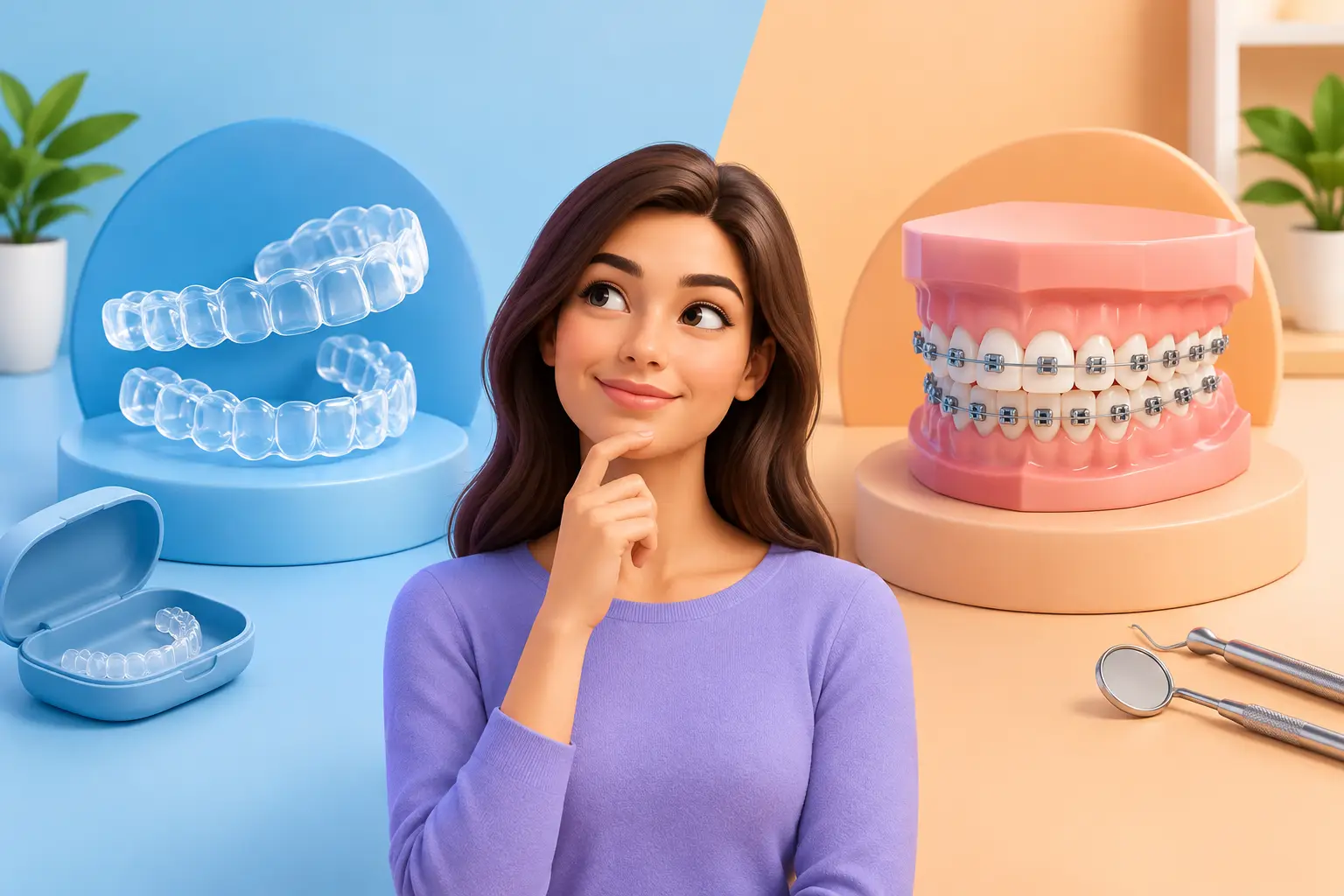
A crowded diary, client meetings, photographs and family occasions can make the thought of visible orthodontic treatment feel like a big decision. When weighing up Invisalign versus braces, the right answer is not simply the option that looks best. It is the treatment that can safely move your teeth, fits your routine and helps you feel confident throughout the process.
Both options can create a healthier-looking, straighter smile. The important difference is how they work, what they can treat and what they ask of you day to day. A professional assessment is the best place to start, because the position of your teeth, bite and long-term dental health all matter.
Invisalign versus braces: the main difference
Invisalign uses a series of clear, removable aligners that are made specifically for your teeth. Each set applies gentle pressure to guide teeth gradually into a planned position. You normally change to a new aligner at intervals advised by your dentist, while attending review appointments to check that treatment is progressing well.
Fixed braces use brackets bonded to the teeth and a wire that is adjusted over time. Modern braces are much neater than many people remember, and ceramic brackets can be less noticeable than traditional metal ones. As the brace stays in place, it works around the clock without relying on you to put it back in after meals.
Neither choice is automatically better. Invisalign is often appealing for adults who want a discreet, flexible way to straighten their teeth. Braces can be the more dependable option for complicated movements, significant crowding or bite concerns that need close control.
Appearance and everyday confidence
For many adults, appearance is the first reason to consider clear aligners. Invisalign aligners are transparent and sit closely against the teeth, so they are generally difficult to notice in everyday conversation. They can be removed for an important event, a meal out or a photograph, although they should be worn for around 20 to 22 hours each day for treatment to remain effective.
Braces are visible, particularly with metal brackets. Some patients are perfectly comfortable with this, and others even enjoy choosing coloured bands. For people who prefer a more subtle look, tooth-coloured ceramic braces may be worth discussing. They are still fixed to the teeth, but can blend in more naturally.
If your work involves regular face-to-face meetings or you simply do not want orthodontic treatment to become the first thing people notice, Invisalign may offer the confidence you want. If discretion matters less than having a treatment that stays working without daily decisions, braces may feel easier.
Comfort, eating and cleaning
Both treatments involve an adjustment period. Teeth can feel tender for a few days after a new Invisalign aligner or a brace adjustment. This usually shows that pressure is being applied as intended, rather than signalling a problem. Any persistent pain, sharp edge or rubbing should be checked by your dental team promptly.
Aligners have the advantage of being removed to eat and drink. You can continue to enjoy your usual meals, then brush your teeth before putting the aligners back in. Water is the safest drink while wearing them, as tea, coffee and coloured drinks can stain aligners or leave sugar against the teeth.
With braces, some foods need to be avoided because they can loosen brackets or bend wires. Hard sweets, popcorn, crusty foods and sticky toffees can cause trouble. Cleaning also takes more care, as food can collect around brackets and beneath the wire. A small orthodontic brush and careful brushing technique make a real difference.
The trade-off is discipline. Invisalign only works as planned when it is worn consistently. Leaving aligners out for long lunches, evenings or weekends can slow progress and affect the final result. A fixed brace removes that responsibility, but demands more attention when eating and brushing.
Which treatment is faster?
Treatment time depends far more on your individual teeth than on the name of the system. Minor spacing or front-tooth alignment may be completed in a relatively short period, while more involved orthodontic cases can take well over a year. Both Invisalign and braces can require refinements, extra aligners or additional adjustments to achieve the intended result.
Braces are often chosen where teeth need more complex movement, such as severe rotations, large gaps, teeth that sit high in the gum, or a bite that needs substantial correction. Invisalign has developed considerably and can now treat many cases that were once considered suitable only for fixed braces. However, it is not the best answer for every mouth.
The most reliable timetable comes after an examination, photographs, scans and a discussion about what you want to change. Be cautious of promises that focus only on speed. Moving teeth safely is more valuable than rushing towards a finish date.
Cost and value: look beyond the starting price
The cost of Invisalign or braces varies according to the complexity of treatment, how long it is expected to take and what is included in the plan. A quote should make clear whether it covers consultations, scans, review appointments, retainers and any likely refinements. Retainers are particularly important, because teeth naturally have a tendency to move after orthodontic treatment.
It can be tempting to choose based on the lowest advertised figure, but an incomplete plan can become less economical later. Ask what happens if an aligner is lost, a bracket breaks, treatment takes longer than predicted or refinement is needed. Clear answers help you compare like for like.
At U Smile Dental, the aim is to make high-quality private dental care approachable, with clear discussion of suitable treatment options and costs before you commit. If you are considering a significant smile improvement, a consultation lets you ask direct questions without guessing from photographs or social media results.
Your bite matters as much as straight front teeth
A straight-looking smile is only part of the picture. Your upper and lower teeth need to meet comfortably when you bite, chew and speak. If you have jaw discomfort, uneven wear, broken teeth, gum concerns or missing teeth, these factors should be assessed before or alongside alignment treatment.
Some patients only need cosmetic alignment of the front teeth. This can be an excellent option when the bite is stable and the goals are modest. Others need a fuller orthodontic plan to avoid moving front teeth into a position that looks good initially but does not function well over time.
Healthy gums are essential. Bleeding gums, swelling or untreated gum disease should be addressed before teeth are moved. Good brushing, interdental cleaning and regular hygiene care protect the result you are investing in, whether you choose removable aligners or fixed braces.
How to decide with confidence
Start with your priorities. If you can reliably wear aligners for most of the day and want the least noticeable option, Invisalign may suit your lifestyle very well. If you know that remembering to wear and clean aligners will be difficult, or your dentist advises that your tooth movements are more complex, braces may be the stronger choice.
It also helps to think beyond the treatment period. Are you comfortable wearing retainers afterwards? Can you attend review appointments? Do you have a holiday, wedding or major work commitment that affects your timing? These practical details can shape a plan that feels manageable rather than disruptive.
A good consultation should leave you feeling informed, not pressured. You should understand what can realistically be achieved, how long it may take, what the fees include and how to care for your smile while treatment is under way. The best choice is the one that respects both your dental needs and the life you need to live while your smile changes.