 Cosmetic, Implant and General Dentistry
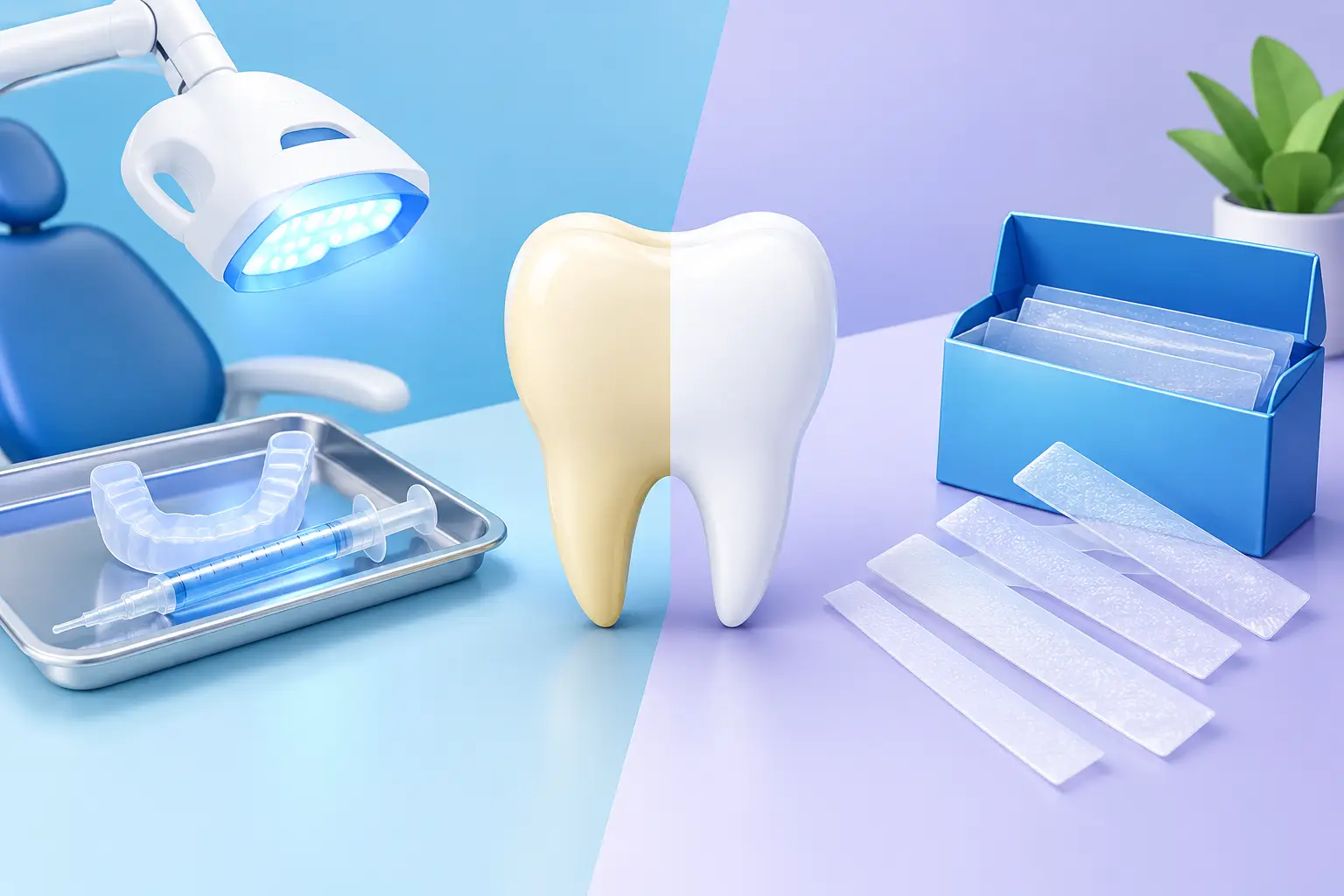
A brighter smile can make a real difference before a wedding, a new job, an important event or simply when you want to feel more confident in photographs. But when comparing professional whitening versus strips, the apparent choice between a dental appointment and a box from the chemist is not always as simple as price. The result you want, the health of your teeth and gums, and the cause of the discolouration all matter.
Whitening strips can look like a convenient shortcut. Professional tooth whitening, however, is planned around your smile, carried out with dental supervision and designed to give a more predictable result. Neither option is right for every person, but understanding the differences can help you spend wisely and avoid disappointment.
Professional Whitening Versus Strips: The Main Difference
The biggest difference is not just where you buy the product. It is the level of assessment, active whitening ingredient and individual care behind the treatment.
Professional whitening starts with a dental examination. Your dentist checks that your teeth and gums are healthy enough for whitening and identifies concerns such as untreated decay, leaking fillings, gum disease, cracks or exposed roots. These issues do not necessarily mean you cannot have whiter teeth, but they may need treatment first to keep the process comfortable and safe.
At a dental practice, whitening can be tailored to the starting shade of your teeth, the level of staining and your desired outcome. Medical-grade systems, including in-practice Zoom whitening where suitable, use professionally regulated whitening gels and controlled application. Your dentist can also advise on home whitening trays, which are made to fit your teeth closely and allow whitening to develop gradually at a pace that suits you.
Whitening strips are pre-coated, one-size-fits-most strips placed over the front of the teeth. They may improve mild surface staining, especially from tea, coffee, red wine or smoking. However, because they are not shaped around your individual teeth, they can sit unevenly, lift at the edges or miss areas near the gum line and between teeth.
Why Results Often Look Different
Professional whitening usually produces a more even change because the whitening gel has closer contact with the teeth. Custom trays also reach more of the visible tooth surface than a flat strip can. This is particularly helpful where teeth are slightly crowded, rotated or unevenly shaped.
Strips tend to work best for people with straight teeth, light staining and modest expectations. The colour change can be subtle, and results vary considerably. Some people see a freshened appearance; others see very little improvement after completing the pack.
Professional treatment is not a promise of a perfectly white, artificial-looking smile. Natural tooth colour differs from person to person, and the safest, most attractive result is often a brighter version of your own shade. A good dentist will discuss what is realistic rather than promising a shade that may not suit your teeth or facial features.
Stains that whitening may not change
Not every dark or uneven area is caused by surface stain. Whitening gel does not alter the colour of crowns, veneers, bridges, white fillings or dentures. If a front crown has become more noticeable beside your natural teeth, whitening the surrounding teeth may be part of a wider cosmetic plan, but the crown itself will not lighten.
Greying after trauma, internal discolouration, certain medication-related staining and developmental changes can also need a more specific approach. In some cases, internal whitening, bonding, veneers or crowns may be discussed after a clinical assessment. This is where an appointment can save money compared with repeatedly trying products that cannot address the real cause.
Safety, Sensitivity and Gum Care
Tooth sensitivity is possible with both professional whitening and strips. It commonly feels like a brief sharp sensation in the teeth, often brought on by cold food or drink. For many people, it settles quickly, but it should not be ignored if it is strong, persistent or accompanied by pain when biting.
With professional whitening, your dentist can reduce the chance of sensitivity by adjusting the treatment plan, recommending shorter wear periods or suggesting products for sensitive teeth. Custom trays are also less likely to allow whitening gel to spread onto the gums when used as instructed.
Strips can touch the gum line, particularly if they slide or are cut too large for the tooth shape. This can cause temporary gum irritation or whitening of the soft tissue. Using more strips than instructed, leaving them on for longer or combining several whitening products does not create better value. It can increase discomfort and make your teeth feel sore.
In the UK, teeth whitening containing or releasing more than a very low level of hydrogen peroxide must be provided by a registered dental professional following an examination. This rule is there to protect patients from unsuitable treatment and unregulated products. Be cautious with whitening offers that promise dramatic results without a dental check or are sold through informal channels.
Time, Convenience and Cost
Strips are usually cheaper at the outset and can be used at home without booking time away from work. That convenience is their strongest advantage. If your teeth are healthy, the staining is mild and you only want a small improvement, they may feel like a reasonable first step.
The trade-off is uncertainty. You may need several applications, results can be patchy, and a product that costs less initially may not feel good value if it does not create the change you hoped for.
Professional whitening costs more because it includes the clinical assessment, regulated materials, tailored application and professional support. For many patients, that makes sense when the aim is a noticeable and even result for an occasion, or when they have experienced sensitivity or poor results with shop-bought products in the past.
It is also worth considering maintenance. Teeth naturally pick up new staining over time, especially if you regularly drink tea, coffee or red wine, smoke, or enjoy strongly coloured foods. Professional whitening does not permanently change the tooth structure, but with good cleaning habits and dentist-approved top-ups where appropriate, the result can be maintained more easily.
Who Is Better Suited to Each Option?
There is no single answer to professional whitening versus strips because expectations and dental history are different for every patient.
Whitening strips may be suitable if you have generally healthy teeth and gums, slight surface staining, straight front teeth and are comfortable with a subtle result. They are not a substitute for a dental check-up, particularly if you have not seen a dentist for some time.
Professional whitening is often the better choice if you want a more noticeable and controlled improvement, have uneven tooth positions, have sensitive teeth, or are unsure why your teeth have changed colour. It is also the sensible route before investing in cosmetic work such as veneers, crowns or composite bonding, as your dentist can help plan the final shade consistently.
Pregnant or breastfeeding patients are generally advised to postpone elective whitening. People with active toothache, bleeding gums, cavities or loose restorations should arrange an examination rather than trying to whiten through the problem. Whitening only changes colour – it does not treat pain, infection or gum disease.
Getting the Most From Any Whitening Treatment
A thorough professional clean may be useful before whitening if surface plaque or tartar is present. This does not bleach the teeth, but it removes deposits that can obscure their natural brightness and helps whitening gel contact a cleaner surface.
After treatment, brush twice daily with fluoride toothpaste and clean between your teeth. For the first couple of days after whitening, many patients choose to limit heavily coloured drinks and foods while their teeth are more prone to picking up stain. Using a straw for cold drinks such as iced coffee can also reduce contact with the front teeth.
Avoid chasing an unrealistically white shade. Healthy teeth can be beautiful in a range of natural colours, and whitening should complement your smile rather than make it look unnatural. If you have crowns, veneers or fillings in visible areas, discuss these before starting so you know how the final colour will look.
At U Smile Dental, professional whitening can be discussed as part of a wider smile consultation, with clear advice on whether whitening alone is likely to achieve the look you want. The most worthwhile choice is the one that protects your teeth, fits your budget and leaves you comfortable smiling long after the special occasion has passed.