 Cosmetic, Implant and General Dentistry
Last Updated: November 5, 2026
Quick Summary
Overcoming dental anxiety with sedation means using medication to help you relax during treatment, from mild nitrous oxide to oral or IV options. Your dental team reviews your health and matches the sedation type to your anxiety level and the work needed. You will need an escort home after oral or IV sedation.
- Sedation dentistry uses medication to help you relax during treatment.
- Nitrous oxide suits mild anxiety, with minutes of recovery and usually no need to avoid driving.
- Oral and IV sedation require an escort, and IV recovery takes longer than oral.
- Your medical history and medications are screened before any sedation is given.
- Telling your dentist about your fear at the start lets them adjust your appointment.
Table of Contents
- Understanding Dental Anxiety and Why It Matters for Your Health
- Sedation Dentistry: What It Is and How It Works
- How to Prepare for Dental Sedation
- What to Expect During Dental Sedation on Treatment Day
- Recovery After Dental Sedation: Safety and Aftercare
- Alternatives to Sedation for Dental Anxiety
- Booking Your Consultation to Talk Through Sedation Options
- Frequently Asked Questions
Understanding Dental Anxiety and Why It Matters for Your Health
Dental anxiety affects a large share of adults, and for many people it is the reason they put off care until a problem becomes urgent, though overcoming dental anxiety with sedation can change that. For a gentler, broader guide to managing dental fear, read Dental Care for Anxious Patients: A Calm Guide. Many people arrive at the dentist worried about how they will cope after avoiding care for years. Sedation is one option that can make treatment more manageable for some people who find it hard to sit in the chair.
Dental anxiety is a fear of dental treatment, while dental phobia is a stronger, more persistent fear that can stop someone from attending at all. Both are common, and both are treatable.
NHS guidance on managing fear of the dentist
Common Causes and Triggers of Dental Anxiety
Most dental fear has a starting point. Common triggers include:
- A painful or frightening experience in childhood or adulthood
- Feeling a loss of control while lying back with your mouth open
- The sound of drills and the smell of the surgery
- Embarrassment about the condition of your teeth
- Needles and the fear of feeling pain
- Hearing stories from friends or family
Knowing your trigger helps you and your dental team plan the right support.
How Avoidance Affects Oral Health
Avoiding the dentist can allow problems to develop. A small cavity can become a larger problem, and gum problems can progress without pain. You can learn what gum disease involves and how it is treated before your next visit.
Breaking the cycle is the first real step. Telling your dentist about your fear at the start allows them to consider how to adjust the pace of your appointment.
Sedation Dentistry: What It Is and How It Works
Sedation dentistry uses medication to help you relax during treatment. Many options keep you awake, and the level of sedation used depends on your individual circumstances and the treatment required.
Conscious sedation is the term for medication that keeps you relaxed while you remain responsive. It is different from general anaesthesia (NICE).
Nitrous Oxide, Oral Sedation and IV Sedation Compared
Here is how the main options compare:
| Option | How it is given | Best for | Typical recovery |
|---|---|---|---|
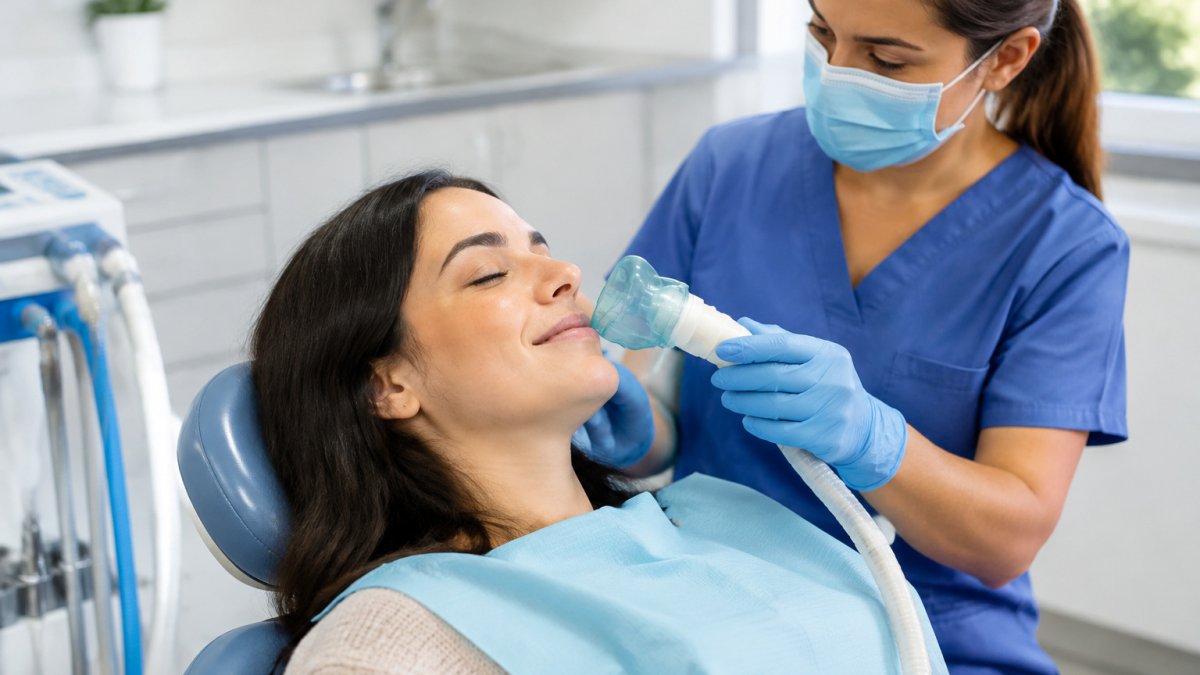
| Nitrous oxide | Mask, inhaled | Mild anxiety, short appointments | Minutes, you can usually drive afterwards |
| Oral sedation | Tablet taken before the visit | Moderate anxiety, longer treatment | Several hours, you need an escort |
| IV sedation | Injection into a vein | Severe anxiety, complex treatment | Longer, you must not drive |
Your dentist can discuss which sedation options may suit your health and the work needed.
How to Prepare for Dental Sedation
Good preparation makes sedation safer and more comfortable. Start by telling the team everything about your health before the day.
Medical History, Medications and Eligibility Screening
Before any sedation, your dental team will typically review:
- Your full medical history and any long-term conditions
- All prescription medicines, supplements and over-the-counter products
- Any allergies, especially to medicines used for sedation
- Previous experiences with anaesthesia or sedation
- Whether you are pregnant or planning to be
Some people are not suitable for certain sedation types, so screening matters. A consultation allows this to be checked properly.
Arranging Transport and Time Off
Plan your day in advance. For oral or IV sedation you will need someone to take you home, because you must not drive afterwards. Arrange time off work and avoid heavy plans for the rest of the day.
Follow the fasting and medication instructions you are given. These rules differ by sedation type, so check them with the team before your appointment.
What to Expect During Dental Sedation on Treatment Day
On the day, you will arrive, check in and talk through the plan with your dentist. The team will explain each step and confirm your consent before any medicine is given.

For nitrous oxide, the mask is placed over your nose and you breathe normally. You will feel relaxed and may feel a tingling sensation. For oral sedation, the tablet is taken before you arrive and takes effect over the following period. For IV sedation, a small cannula is placed in your hand or arm.
Throughout treatment, the team monitors your breathing, pulse and oxygen levels. You can raise a hand to signal a pause at any time. Many patients find they remember very little of the appointment afterwards.
Recovery After Dental Sedation: Safety and Aftercare
Recovery depends on the sedation used. Your dental team will give you specific guidance for your appointment.
Follow these aftercare steps:
- Have a responsible adult take you home and stay with you
- Do not drive, operate machinery or sign important documents that day
- Avoid alcohol until the effects have fully worn off
- Eat something light and drink water
- Rest, and contact the surgery if you have concerns
Keep any written instructions you are given handy, and contact the practice if anything worries you.
Alternatives to Sedation for Dental Anxiety
Sedation is not the only way to manage fear. Many patients do well with simpler approaches:
- Agreeing a stop signal so you always feel in control
- Asking for short, frequent appointments rather than one long visit
- Using breathing exercises or listening to music through headphones
- Gradual exposure, such as a visit just to sit in the chair and meet the team
- Talking through each step before it happens
Some people combine these steps with sedation for the best result. A consultation helps you decide which mix suits you.
Booking Your Consultation to Talk Through Sedation Options
If dental anxiety has kept you away from the dentist, a consultation is a low-pressure first step. You can ask questions, discuss your history and hear which options might suit you before committing to anything.
General Dental Council guidance for patients
U Smile Dental offers services in English, German, Spanish, Persian and Romanian, so you can talk through your concerns in a language you feel comfortable using. To arrange a visit, contact the practice or request a consultation through our booking form. Before deciding, you can also review our fees so you know what to expect.
Frequently Asked Questions
Can sedation help with dental anxiety?
Yes. Sedation dentistry is designed for patients who find dental treatment stressful or frightening. Several options exist, from mild inhaled sedation to oral or intravenous medication. A consultation with a qualified dentist can help identify which approach may be appropriate for your circumstances. Sedation does not treat the underlying anxiety, but it can make appointments manageable while you build confidence over time.
Will I be asleep during dental sedation?
Not usually. Most sedation used in general dentistry keeps you conscious, though you may feel drowsy, relaxed or have little memory of the treatment afterwards. General anaesthesia, where you are fully unconscious, is a separate procedure with its own assessment and is rarely used for routine dental work. Your dentist can explain what level of awareness to expect before your appointment.
Can I drive home after dental sedation?
Generally, no. After most forms of sedation, including oral and intravenous medication, you should not drive, operate machinery or make important decisions until the effects have fully worn off, and you should arrange for a responsible adult to take you home. Effects of some sedation types wear off quickly, but you should confirm driving advice with your dental team. Follow the specific instructions you are given for your appointment, as these depend on the sedative used and your own response.
How should I prepare for dental sedation?
Preparation usually includes giving the dental team a full medical history and a list of all medications and supplements you take, and arranging an escort and transport home if sedation is used. Let the team know about any previous reactions to medication and any conditions affecting breathing or your heart. Asking questions before the day is useful, as it helps you feel informed and in control of the appointment.
