 Cosmetic, Implant and General Dentistry
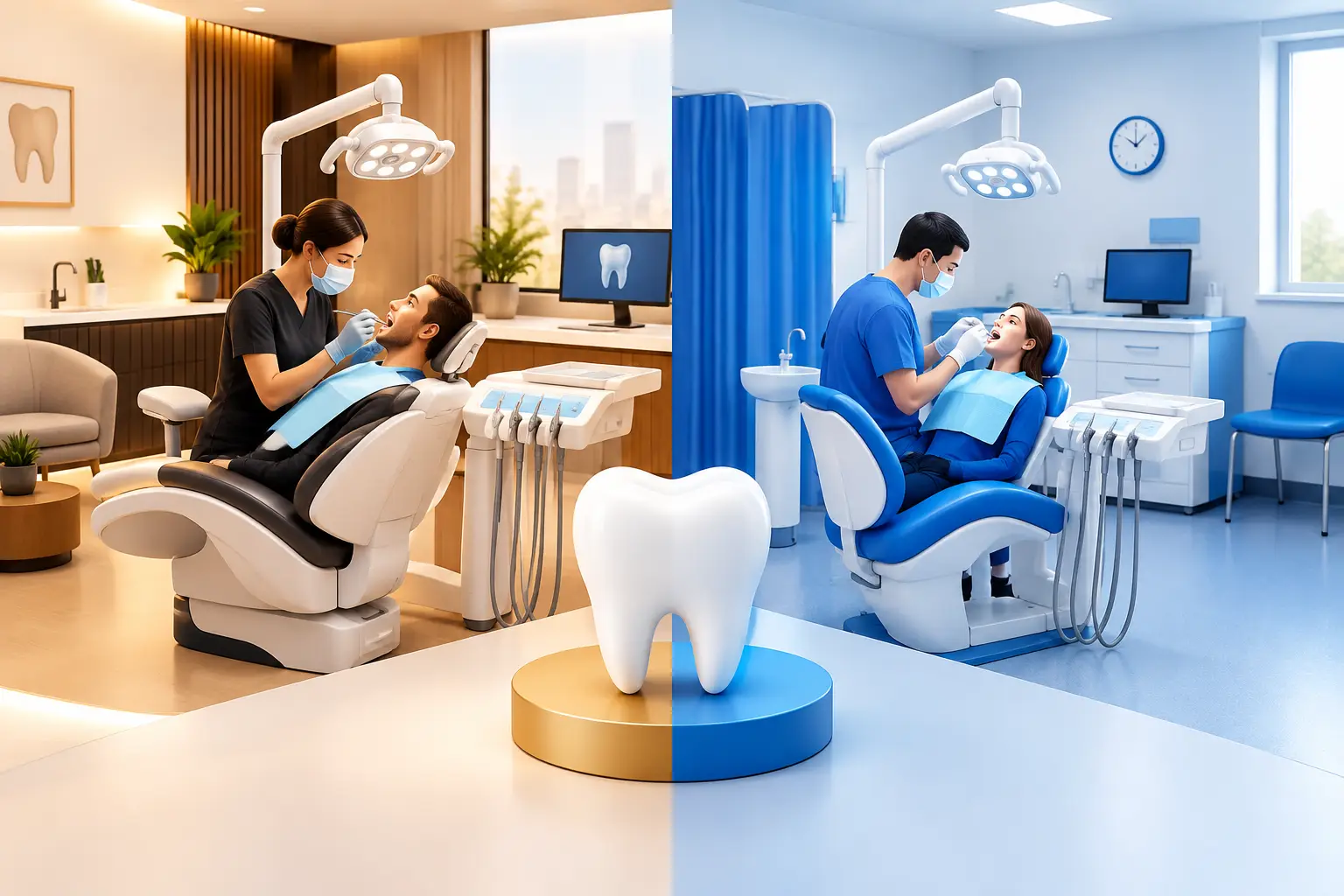
A toothache that keeps you awake, a broken crown before an important event, or dentures that no longer feel secure can make the choice between private versus NHS dentistry feel far more urgent than a simple question of price. Both routes play an essential role in dental care, but they are built around different priorities. The best choice is the one that gives you the care, timing and treatment options you need.
For many people, NHS care is a sensible route for routine, clinically necessary treatment. Private dentistry can be a better fit when you need a prompt appointment, want more time to discuss your choices, or are considering cosmetic and advanced restorative work. Neither is automatically right for everyone.
Private versus NHS dentistry: the key differences
The NHS is designed to provide clinically necessary dental treatment at set patient charges in England, subject to availability and eligibility. This may include examinations, fillings, extractions, dentures, crowns and root canal treatment where these are needed to protect your oral health. NHS charges are arranged in treatment bands, and the same course of treatment may cover more than one procedure.
Private dentistry is paid for directly by the patient, with fees set by the practice. It usually offers a broader choice of materials, appointment times and treatment approaches. You may also have access to procedures that are not routinely available on the NHS, including professional tooth whitening, veneers, Invisalign treatment and many elective cosmetic options.
The practical difference is often choice. With private care, your dentist can discuss options based not only on what is clinically necessary, but also on appearance, longevity, comfort and convenience. That can matter greatly if you have a visible front tooth, an old restoration you would like improved, or several dental concerns that need a carefully planned solution.
Appointment availability can shape your decision
Finding an NHS dentist accepting new patients can be difficult in some areas. Even if you are registered, routine appointments may be booked some time ahead. This is not a reflection on the quality or commitment of NHS dental teams. It is often the result of high demand and limited appointment capacity.
Private practices generally have greater flexibility over appointment lengths and scheduling. This can make a real difference for people balancing work, family responsibilities or travel. It can also be reassuring when something goes wrong unexpectedly. A same-day emergency appointment for severe tooth pain, swelling, a lost filling or a broken tooth may prevent a stressful problem from becoming a longer-term one.
If you are nervous about dental treatment, time matters in another way. A rushed consultation can make even a straightforward visit feel daunting. Private appointments can allow more space to explain what is happening, answer questions and agree on a pace that feels manageable. For patients who prefer to discuss care in German, Spanish, Persian or Romanian as well as English, clear communication can be just as valuable as clinical treatment.
Routine check-ups and prevention
Both NHS and private dentists focus on prevention. Regular examinations, hygiene advice, gum health checks and early diagnosis are the foundation of keeping your natural teeth for longer.
The difference may be in the level of personalisation and the time available. A private dentist may offer a longer consultation to look at worn teeth, old fillings, gum recession or bite concerns in detail. This does not mean every patient needs private care. If your needs are straightforward and you can access an NHS appointment, NHS dentistry can offer excellent routine support.
Costs: lower upfront fees versus wider choices
Cost is understandably central to the private versus NHS dentistry decision. NHS treatment is generally more affordable upfront because charges are subsidised. For necessary treatment, this can make dental care accessible when household budgets are tight.
Private fees are higher because they reflect the time, materials, laboratory work, technology and clinical planning involved. However, comparing prices only at the first appointment can be misleading. The most suitable treatment is not always the cheapest one, and the most expensive option is not always necessary.
For example, a tooth with a large old filling may be restored in different ways depending on its condition. One patient may need a simple filling. Another may benefit from a crown to protect a weakened tooth. A third may prefer an aesthetic material for a visible tooth. Your dentist should explain the benefits, limits, likely lifespan and fees of each suitable option before you commit.
For larger treatment plans, ask for a written breakdown. It should make clear what is included, whether laboratory fees apply, how many appointments are likely to be needed and whether finance options are available. Good dental care should feel clear, not pressured.
Cosmetic dentistry is usually a private choice
The NHS does not generally provide treatment solely to improve the appearance of healthy teeth. This means whitening, porcelain veneers, cosmetic bonding and orthodontic alignment for aesthetic reasons are normally private treatments.
Private dentistry is particularly useful when the result matters as much as the repair. A crown may need to restore a damaged tooth, but on a front tooth you may also want the shade, shape and translucency to blend naturally with your smile. Similarly, someone with discoloured teeth may be looking for professionally supervised whitening rather than a temporary cosmetic fix.
A good cosmetic consultation should remain honest. Teeth do not need to be perfectly uniform to be healthy or attractive, and not every concern needs veneers or crowns. Conservative options, such as whitening, white fillings or alignment, may be enough. The right plan protects healthy tooth structure wherever possible while helping you feel more confident about your smile.
Complex restorative care needs careful planning
When several teeth are missing, loose dentures make eating difficult, or failing teeth are affecting confidence, treatment is rarely a one-appointment decision. Dental implants, bridges, dentures and full-mouth rehabilitation require planning around your health, bone levels, bite, expectations and budget.
Private care can offer more options in these cases, including implant-supported bridges or dentures and staged treatment plans. It may also make it easier to coordinate appointments and complete care within a timeframe that suits you. Patients often travel for this level of treatment because they are looking for a combination of clinical experience, clear pricing and a result that feels secure and natural.
At U Smile Dental, patients can discuss general, restorative, cosmetic and emergency care in one private setting, with treatment plans tailored to the condition of their teeth and gums. As a CQC-registered practice, the focus is on professional care, a clean and welcoming environment, and explaining each option clearly before treatment begins.
When NHS dentistry may be the better fit
Private treatment is not automatically the best answer. NHS dentistry may be right for you if you have access to a local dentist, need routine clinically necessary care and are comfortable with the available appointment times and treatment choices.
It can also be the most practical option if your main priority is keeping immediate costs low. There is no disadvantage in choosing NHS care for the right reason. The important thing is not to delay a check-up, ignore bleeding gums or put up with pain because you are unsure which route to take.
When private dentistry may suit you better
Private care may be worth considering if you need to be seen quickly, want a wider choice of appointment times, or would value more time to talk through treatment. It can also suit people looking for cosmetic improvements, tooth-coloured restorations in prominent areas, professional whitening, Invisalign, implants or detailed rehabilitation work.
Some patients choose a mixed approach. They use NHS dentistry for routine care where available, then seek private treatment for a cosmetic concern, an urgent issue or a more advanced restorative option. Your dental health needs can change over time, so the decision does not have to be permanent.
The most useful question is not simply, “Which is cheaper?” Ask what problem you need solved, how soon you need help, and what outcome will let you eat, speak and smile comfortably. A clear consultation should give you enough information to choose without pressure – and getting that clarity is often the best first step towards feeling in control of your dental care.