 Cosmetic, Implant and General Dentistry
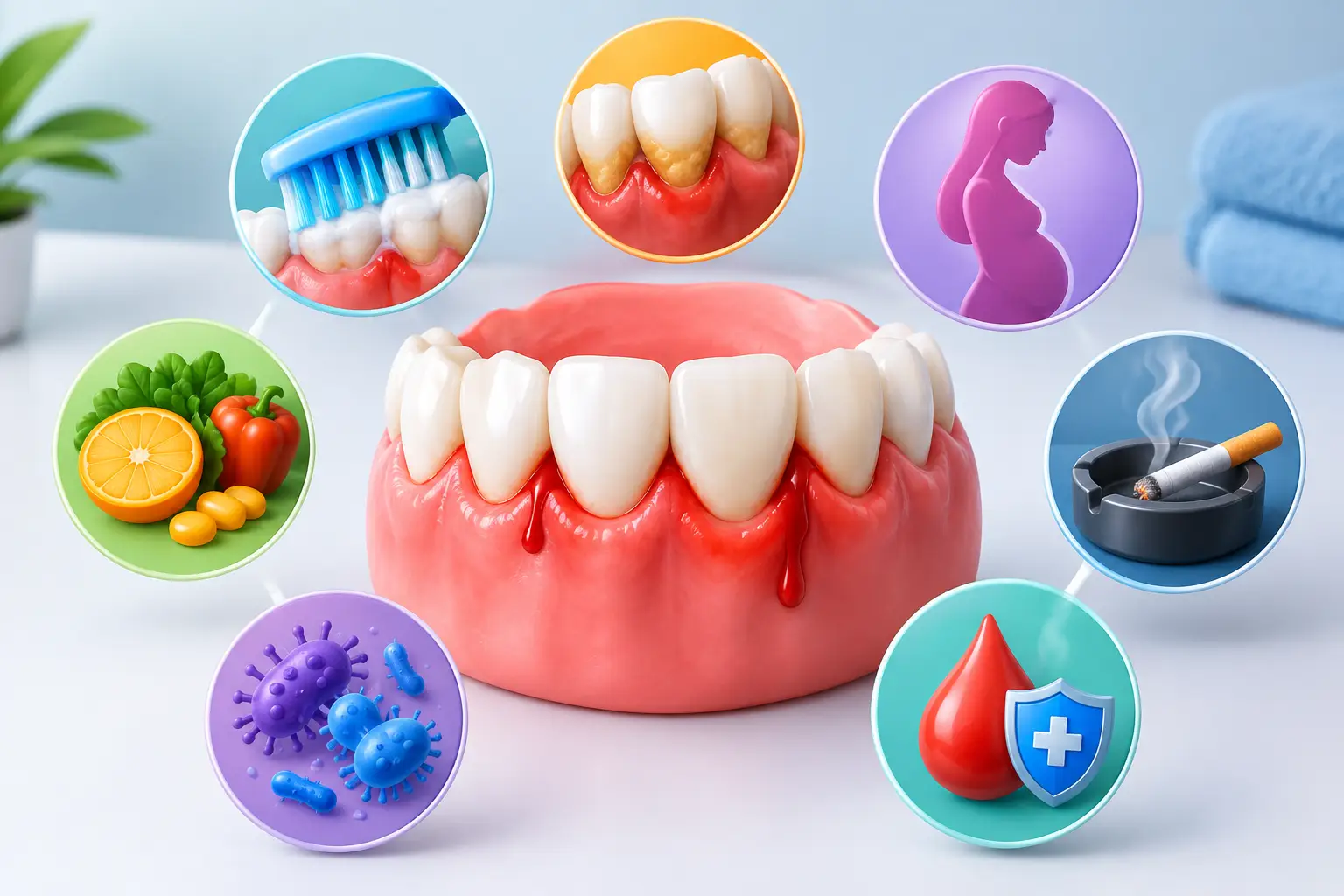
Seeing pink in the sink after brushing can be unsettling, especially when your teeth do not hurt. So, what causes bleeding gums? Most often, it is a sign that plaque has been sitting around the gumline and causing inflammation. It is common, but it should not be treated as normal or ignored. Healthy gums should not bleed during regular brushing or cleaning between the teeth.
What causes bleeding gums most often?
The leading cause is gum inflammation, known as gingivitis. A soft, sticky film of bacteria called plaque builds up on teeth every day. If it is not removed thoroughly, particularly where the tooth meets the gum, the gums can become red, puffy, tender and prone to bleeding.
This does not always mean someone has poor oral hygiene. Plaque can collect in difficult areas around crowded teeth, old fillings, crowns, bridges, braces and partly erupted wisdom teeth. Busy routines, tired evenings and avoiding a sore area while brushing can all make the problem worse. The good news is that early gum inflammation can often be improved with professional cleaning and consistent home care.
When plaque is left in place, it can harden into tartar, also called calculus. Tartar cannot be brushed away at home and creates a rough surface where more plaque can gather. At that point, a dental hygiene appointment may be needed to properly clean the teeth and give the gums a chance to settle.
Brushing too hard or changing your routine
A new toothbrush, firmer brushing technique or a tight-fitting interdental brush can make gums bleed temporarily. This is especially likely if you have started cleaning between your teeth after a long gap. The gums may already be inflamed, and effective cleaning can reveal the bleeding that was previously hidden.
Do not stop cleaning the area simply because it bleeds. Instead, use a soft toothbrush, gentle small circular movements and the correct size of interdental brush or floss. Bleeding that continues beyond a week or two of careful cleaning deserves a dental assessment.
Gum disease that has progressed
Untreated gingivitis can develop into periodontitis, a more serious form of gum disease. Here, infection and inflammation affect the supporting structures around the teeth. Gums may bleed, pull away from the teeth or look lower than before. Some people notice persistent bad breath, a bad taste, loose teeth or spaces developing between their teeth.
Periodontitis is not always painful, which is why it can progress quietly. It can lead to bone loss and, eventually, tooth loss if untreated. Treatment depends on the severity and may involve detailed cleaning below the gumline, ongoing hygiene visits and a tailored plan to stabilise the condition. Acting early usually means simpler, more comfortable care.
Other reasons gums can bleed
Plaque-related gum disease is the usual explanation, but it is not the only one. Hormonal changes can make gums more sensitive to plaque, so bleeding can be more noticeable during pregnancy, puberty or the menopause. Pregnancy gingivitis is common, but it is still worth discussing with a dentist or hygienist rather than waiting until after the baby arrives.
Smoking and vaping can also affect gum health. Smoking may mask bleeding by reducing blood flow to the gums, so gum disease can be advanced before it becomes obvious. If someone stops smoking, bleeding may appear more noticeable at first as circulation improves. This is a reason to arrange a check-up, not a reason to restart.
Dry mouth can contribute too. Saliva helps rinse away food debris and protect the mouth. Some medicines, dehydration, mouth breathing and certain health conditions can reduce saliva flow, allowing plaque to build up more readily.
Nutritional deficiencies are less common in the UK but can play a part, particularly a lack of vitamin C. A restricted diet, difficulty eating, heavy alcohol use or an underlying medical concern should be discussed with a GP as well as a dental professional.
A few medicines can increase the likelihood of bleeding. These include blood-thinning medicines and some drugs that cause gum enlargement or dry mouth. Never stop prescribed medication because of bleeding gums. Tell the dental team what you take, including over-the-counter remedies and supplements, so treatment can be planned safely.
When bleeding gums need prompt attention
A small amount of bleeding after brushing is usually not an emergency, but it still warrants attention if it keeps returning. Book a dental examination if your gums bleed for more than a week or two, or if you have swelling, soreness, persistent bad breath, gum recession or changes to the way your teeth fit together.
Seek urgent advice if bleeding is heavy, does not stop with gentle pressure, follows an injury, or comes with facial swelling, severe pain, fever or a loose tooth. These symptoms may point to infection or trauma that needs prompt care.
It is also sensible to speak with your GP if you are bruising easily, bleeding from other areas, feeling unusually tired or experiencing unexplained weight loss. Bleeding gums are usually a dental issue, but occasionally they can form part of a wider health picture.
How to stop bleeding gums from coming back
The right solution depends on the cause. If plaque is the issue, the aim is not to scrub harder. It is to remove plaque gently and consistently from every surface, including between the teeth and close to the gumline.
Brush twice daily for two minutes with a soft-bristled brush and fluoride toothpaste. Angle the bristles towards the gumline and clean each area carefully without forcing the brush into the gums. Clean between your teeth once a day with interdental brushes, floss or another method recommended for your mouth. The spaces between teeth vary, so one size does not suit everyone.
Spit out excess toothpaste after brushing, rather than rinsing straight away, to allow fluoride to stay on the teeth. A dentist or hygienist may also recommend a short course of an antibacterial mouthwash in specific circumstances. Mouthwash can be useful, but it cannot replace brushing and interdental cleaning.
Professional care matters when tartar has formed or gum disease is established. A thorough examination can identify plaque traps around old restorations, poorly fitting dentures, broken teeth or crowded areas that make cleaning difficult. It also gives you practical advice that fits your smile, rather than a generic routine that is hard to keep up.
At U Smile Dental, patients can be assessed in a calm private setting, with clear explanations of what is causing the bleeding and what treatment is genuinely needed. For nervous patients, taking the first step can be the hardest part, but early assessment is usually far easier than waiting for pain or tooth movement to develop.
Do not let a painless sign become a bigger problem
Bleeding gums are often an early warning, not a reason for panic. With good daily cleaning and the right professional support, many cases of gingivitis improve well. If bleeding persists, worsens or comes with swelling, bad breath or loose teeth, arrange an appointment rather than hoping it will settle on its own. Your gums support every tooth in your smile, and they deserve the same attention as the teeth you see in the mirror.