 Cosmetic, Implant and General Dentistry
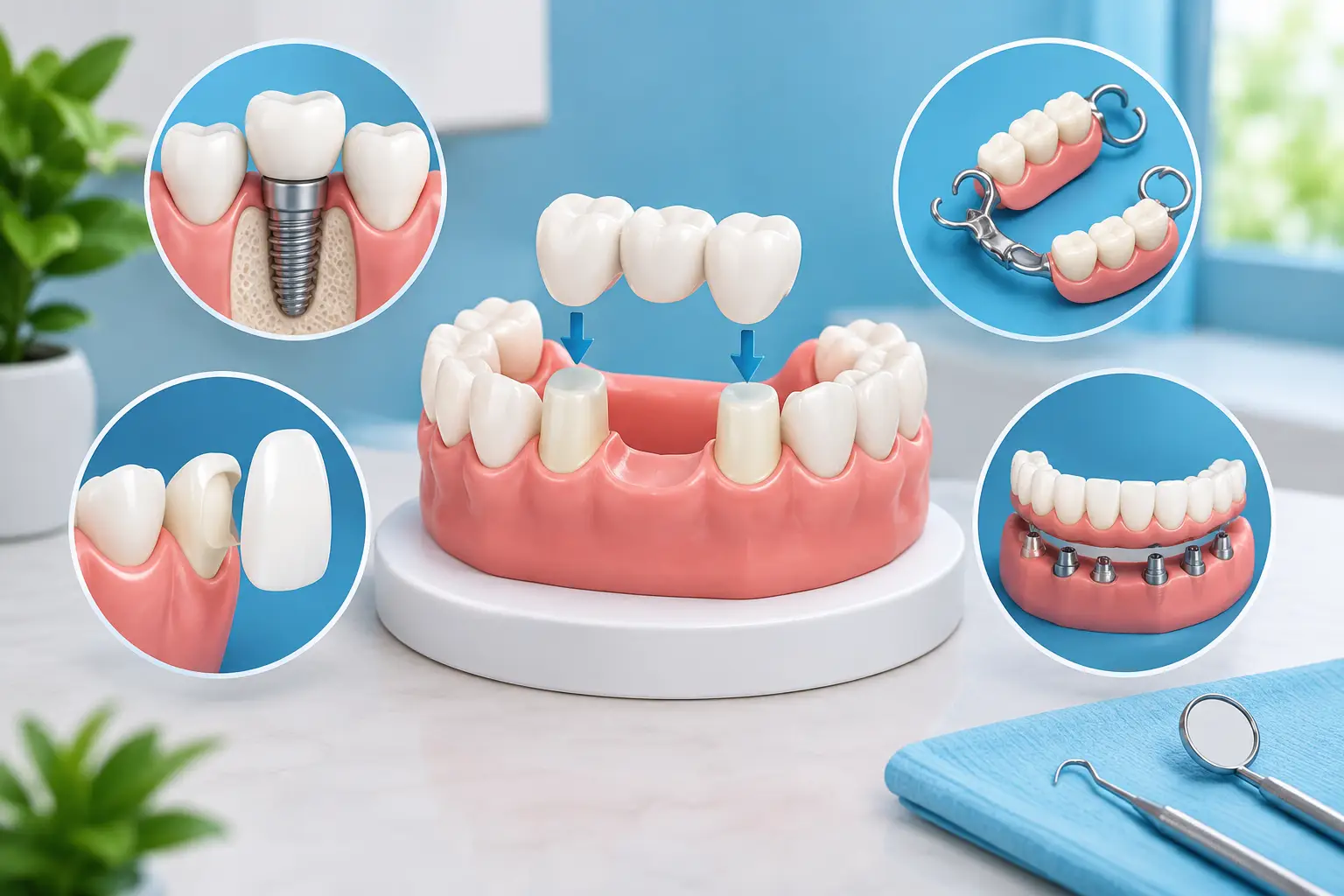
A bridge can restore a missing tooth beautifully, but it is not the only way forward. The right dental bridge alternatives depend on where the gap is, the health of the neighbouring teeth and gums, your budget, and how you want your smile to feel and function in the years ahead.
For some patients, a bridge is the most sensible and cost-effective treatment. For others, an implant or removable denture protects more natural tooth structure, offers greater flexibility, or better suits a larger restoration. A careful consultation makes the difference between simply filling a gap and choosing a solution you can feel confident about.
Why consider alternatives to a dental bridge?
A conventional dental bridge is a fixed replacement tooth supported by crowns on the teeth either side of a gap. It can look natural, improve chewing and stop nearby teeth from drifting. It is a well-established treatment with many advantages, particularly where the supporting teeth already have large fillings, old crowns or need strengthening.
However, preparing a traditional bridge means reshaping those neighbouring teeth to make room for crowns. If they are healthy and untouched, some patients would rather preserve them. A bridge also relies on the long-term health of its supporting teeth. Decay, gum disease or a problem around one supporting tooth can affect the whole restoration.
That does not mean a bridge is a poor choice. It means it should be chosen for the right reasons. The best option is individual, not a one-size-fits-all answer.
Dental bridge alternatives to discuss with your dentist
Dental implants
A dental implant replaces the missing tooth root with a small titanium post placed in the jawbone. Once it has healed, a custom-made crown is fitted on top. It looks and functions much like a natural tooth, and it does not require adjacent teeth to be filed down.
For a single missing tooth, an implant is often the closest alternative to replacing what nature provided. It can support comfortable chewing, help maintain bone in the area and make cleaning easier than a joined restoration because you can floss around the implant crown in a similar way to a natural tooth.
The trade-off is time and upfront cost. Implant treatment involves a minor surgical procedure and a healing period before the final crown is fitted. Some people need additional treatment, such as bone grafting, if the jawbone has reduced after a tooth has been missing for a long time. Smoking, uncontrolled diabetes and active gum disease can also affect suitability and healing.
Implants are not always the cheapest route at the start, but their independent support can make them excellent long-term value for the right patient. They are particularly worth discussing if the teeth beside the gap are healthy.
Implant-supported bridges
Where several teeth are missing together, individual implants for every tooth may not be necessary. An implant-supported bridge uses two or more implants to support a fixed row of replacement teeth. Unlike a conventional bridge, it does not depend on natural teeth at either end.
This option can be useful for patients who want something fixed rather than removable, especially in a visible part of the smile or where chewing has become difficult. It may also be an option for replacing a full arch of teeth using a carefully planned number of implants.
Planning is essential. Your dentist will assess the quantity and quality of bone, the bite, gum condition and the appearance of the smile. A well-made implant bridge should be designed to look natural, be comfortable to clean and distribute biting forces safely.
Removable partial dentures
A partial denture is a removable appliance that fills one or more gaps. Modern dentures can be made from acrylic, metal or flexible materials, depending on the clinical needs and design. They can replace teeth in different areas of the mouth without altering every neighbouring tooth.
Dentures are often a practical solution where several teeth are missing, where an implant is not suitable, or where a patient wants to restore their smile without the cost and treatment time of fixed work. They can also be used as a temporary replacement while an implant site heals.
The main compromise is that a denture is removable. It can take time to get used to speaking and eating with it, and it must be taken out for cleaning. Some designs use clasps that may be visible when you smile, although careful planning can keep this discreet. A denture may also need adjustment, relining or replacement as the gums and jawbone change over time.
For many people, though, a well-fitted partial denture provides a comfortable, attractive and affordable answer. It should never be treated as a lesser option simply because it is removable.
Resin-bonded bridges
A resin-bonded bridge, sometimes called a Maryland bridge, is a conservative fixed option for certain gaps. Rather than placing crowns on the teeth next to the space, the replacement tooth is attached to a thin wing bonded to the back of a neighbouring tooth.
This can be an appealing choice for a missing front tooth, especially when the supporting teeth are healthy and there is enough bite clearance. Very little, if any, tooth preparation may be needed. The treatment is usually quicker and less invasive than a conventional bridge or implant.
It is not suitable for every position in the mouth. Back teeth receive higher biting forces, and a resin-bonded bridge may be more likely to come loose there. It may also need re-bonding at some point. Even so, it can be an excellent medium-term or long-term solution when properly selected and carefully made.
Orthodontic space closure
Occasionally, the best way to deal with a gap is not to replace the missing tooth at all. Orthodontic treatment, including clear aligners in suitable cases, can move neighbouring teeth into a better position and close or reduce the space.
This approach is more likely to be considered when teeth are already crowded, when a small tooth is missing, or when the bite would benefit from movement. It requires detailed planning because closing a space changes the way teeth meet and can affect the proportions of the smile. Cosmetic reshaping, bonding or veneers may sometimes be used afterwards to refine the result.
Orthodontic closure is not a quick fix, but it can avoid a bridge, denture or implant in carefully selected cases. It is especially valuable when it improves overall tooth alignment at the same time.
Leaving the gap untreated
If a missing tooth is at the very back of the mouth and you are chewing well, it may sometimes be reasonable to leave the space alone. This is not automatically the wrong choice, particularly if replacement would involve complex treatment with little practical benefit.
That said, gaps can allow nearby teeth to tilt or over-erupt, alter how your bite meets and make food trapping more likely. A missing front tooth also has obvious effects on confidence and speech for many people. Your dentist can explain the likely consequences in your particular mouth rather than assuming every gap needs the same treatment.
How to choose between bridge options
Start with the condition of the teeth beside the gap. If they already need crowns, a conventional bridge can be an efficient way to restore them while replacing the missing tooth. If they are healthy, an implant or resin-bonded bridge may preserve more natural enamel.
Next, think about your gums and bone. Stable gum health is vital for any restoration, while implants require enough bone for safe placement or a willingness to consider grafting. Your bite matters too. Patients who clench or grind their teeth may need a stronger design and a night guard to protect their investment.
Appearance, convenience and finances are equally valid parts of the decision. An implant can offer a highly natural fixed result but requires more time and a larger initial investment. A partial denture can restore function quickly and economically but needs daily removal. A resin-bonded bridge is gentle on teeth but may not be strong enough for every site.
At U Smile Dental, treatment planning should be clear, unhurried and based on what will work for your health, lifestyle and expectations. Ask to see the proposed result, understand what maintenance will involve and request a transparent estimate before you decide.
Looking after any tooth replacement
Every replacement option needs care. Brush twice daily with fluoride toothpaste, clean between teeth or around the restoration as advised, and attend regular check-ups and hygiene visits. Bridges often need interdental brushes or floss threaders underneath the false tooth. Dentures should be cleaned daily and removed overnight unless your dentist advises otherwise. Implant crowns need the same attention to plaque control as natural teeth because gum inflammation can still develop around them.
If a bridge feels loose, a denture rubs, an implant crown feels different when biting, or you notice bleeding gums, arrange an appointment promptly. Small problems are usually easier to manage before they become painful or more costly.
A missing tooth does not have to leave you limited to one answer. The most worthwhile treatment is the one that protects your remaining teeth, fits comfortably into daily life and gives you a smile you are happy to use without hesitation.