 Cosmetic, Implant and General Dentistry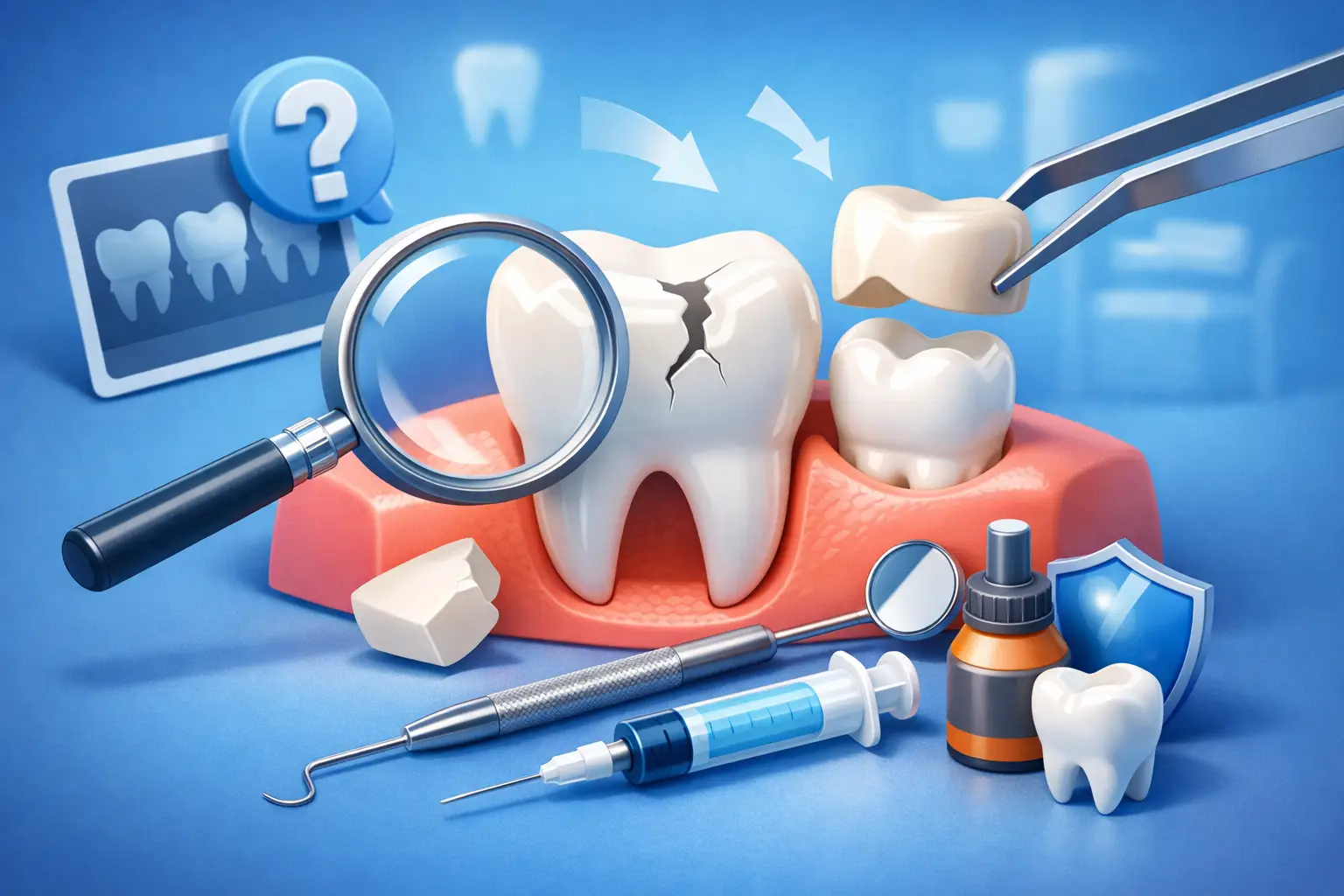
A broken tooth can happen over lunch, during a weekend match or when an old filling finally gives way. If you need broken tooth repair Luton, the priority is to protect the tooth, ease any discomfort and have it assessed promptly. What looks like a small chip can sometimes expose a crack, weaken the remaining tooth or allow bacteria to reach the nerve.
The good news is that modern dentistry offers several ways to restore a damaged tooth naturally and securely. The right option depends on where the break is, how much healthy tooth remains and whether the nerve has been affected. A dentist can give clear advice after examining the tooth and taking an X-ray where needed.
What to do straight after a tooth breaks
Rinse your mouth gently with warm water to clear away any small pieces, then keep any larger fragment in a clean container. In some cases, it may be possible to reattach it or use it to guide the shape and colour of your restoration.
If there is bleeding, press a clean piece of gauze or cloth against the area. A cold pack held against the outside of the cheek can help reduce swelling. Avoid chewing on that side, and choose soft foods until you have been seen. If a sharp edge is rubbing your tongue or cheek, temporary dental wax from a pharmacy may make you more comfortable.
Pain relief can be useful, provided it is suitable for you and taken according to the packet instructions. Do not place aspirin directly onto the tooth or gum. It can burn delicate tissues and will not fix the cause of the pain.
A knocked-out adult tooth needs particularly urgent attention. Hold it by the crown rather than the root, gently rinse it if dirty, and try to place it back in the socket if you can do so safely. If not, keep it in milk or inside your cheek and seek emergency dental care straight away.
When a broken tooth is an emergency
Not every chipped tooth needs treatment within the hour, but it should not be ignored. Same-day care is advisable if you have severe or worsening pain, facial swelling, persistent bleeding, a loose tooth, a deep break, or a tooth that has changed colour after an impact.
A broken front tooth can also feel urgent for understandable reasons. Beyond appearance, a jagged edge can cut the lips or tongue, while an exposed inner layer may become sensitive to air, cold drinks and sweet foods. Prompt assessment often makes the repair simpler.
If swelling is spreading, you have difficulty swallowing or breathing, or you feel seriously unwell, seek urgent medical help. Dental infections can become more serious when left untreated.
Broken tooth repair in Luton: the treatments available
There is no one-size-fits-all repair. A small chip on a visible front tooth is very different from a back tooth split around a large old filling. Your dentist should explain what can realistically be preserved, how long each option is likely to last and the costs involved before treatment begins.
Composite bonding for chips and small breaks
For a minor chip or worn corner, white composite bonding is often a conservative choice. The dentist carefully adds tooth-coloured material, shapes it to blend with your natural enamel and hardens it in place. It can usually be completed in one appointment and often requires little or no drilling.
Bonding is a good option when preserving as much natural tooth as possible matters. However, composite can stain or chip over time, especially if you bite pens, grind your teeth or regularly chew hard foods. It may need polishing, repair or replacement in future.
White fillings for damaged areas
When decay or a failed filling has caused part of a tooth to break, a white filling may restore the missing section. This works best where enough strong tooth structure remains to support the filling.
A filling is not always the answer for a heavily weakened tooth. If a large portion has fractured, placing a bigger filling can leave the remaining walls vulnerable to another break. In that situation, a crown may offer better protection.
Dental crowns for strength and appearance
A crown is a custom-made cover that fits over a prepared tooth. It is often recommended after a substantial fracture, a large filling or root canal treatment, when the tooth needs support as well as a natural-looking finish.
Porcelain crowns are popular for their lifelike appearance, particularly in the smile line. Different materials suit different teeth, and your dentist will consider bite forces, neighbouring teeth and your expectations for colour and shape. A crown involves more tooth preparation than bonding, but it can be the more dependable long-term choice for a badly damaged tooth.
Root canal treatment when the nerve is involved
A crack or deep fracture may expose or inflame the nerve inside the tooth. Signs can include lingering sensitivity to hot or cold, throbbing pain, pain when biting, or a pimple-like swelling on the gum. Root canal treatment removes infected or damaged tissue from inside the tooth, cleans the canals and seals them so that the tooth can remain in place.
Once treated, the tooth is commonly restored with a filling and, where appropriate, a crown. Root canal treatment is designed to save your natural tooth, not remove it. It may sound daunting, but treatment is carried out with local anaesthetic and is often a relief for patients who have been living with toothache.
Extraction and replacement when a tooth cannot be saved
Some fractures extend below the gum line or into the root, leaving too little healthy structure for a reliable restoration. If saving the tooth would not offer a predictable result, extraction may be the kinder and more cost-effective option.
A missing tooth can then be replaced with a dental implant, bridge or denture. An implant is a fixed replacement that does not rely on neighbouring teeth, but it requires sufficient bone and a healing period. A bridge can provide a fixed result more quickly in some cases, while a denture may suit patients replacing several teeth or looking for a removable solution. The best choice depends on your oral health, budget and the position of the tooth.
Why quick treatment can make a real difference
A fractured tooth does not repair itself. Even if discomfort settles after a day or two, the crack or exposed area can still allow bacteria inside. Delaying care may turn a simple bonded repair into a need for root canal treatment, a crown or replacement of the tooth.
There is also the practical issue of the bite. Once a tooth has lost a corner or cusp, it can take more pressure in the wrong places. That can enlarge a crack, damage the opposing tooth or make eating increasingly uncomfortable. Early care is usually more conservative and can be better value in the long run.
How to prevent another break
If a tooth has broken because of an old restoration, decay or a hard bite, it is worth looking beyond the immediate repair. Regular check-ups help spot cracked fillings and weakened teeth before they fail. A custom night guard can protect teeth if you clench or grind during sleep, while a sports mouthguard is sensible for contact activities.
Try not to use teeth to open packaging, cut thread or crack nuts. Ice, hard sweets and unpopped popcorn kernels can be enough to damage a tooth that is already weakened. If you have had repeated chips in the same area, your dentist may also check whether your bite needs adjustment.
At U Smile Dental, patients can discuss emergency and restorative options in a calm, welcoming setting, with clear treatment recommendations and access to same-day emergency appointments where available. Consultations can be provided in English, German, Spanish, Persian and Romanian, helping more patients understand exactly what is happening and what their choices are.
A broken tooth is unsettling, but acting quickly gives you the best chance of keeping treatment straightforward. Protect the area, avoid chewing on it and arrange a dental assessment as soon as you can – the right repair can restore both comfort and confidence in your smile.