 Cosmetic, Implant and General Dentistry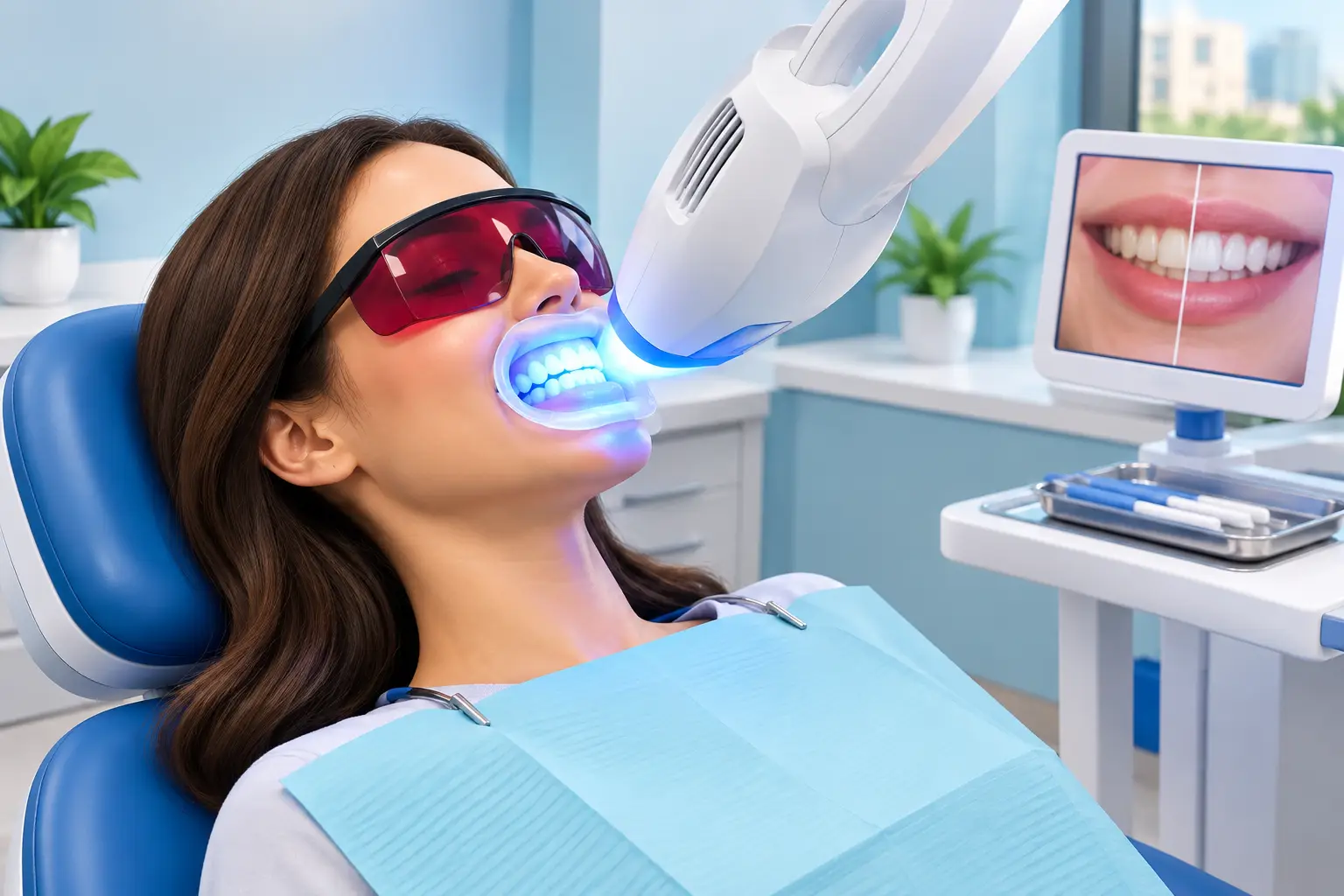
A brighter smile can make a real difference before a wedding, holiday, new job or simply when you are tired of hiding your teeth in photographs. Zoom teeth whitening Luton is designed for people who want a noticeable, professionally supervised result without trying to manage uncertain products at home.
Professional whitening is not about producing an artificial, one-size-fits-all shade. It is about lifting the staining that has built up over time and helping your natural teeth look fresher, lighter and more even. The best result is one that suits your complexion, smile and expectations.
What is Zoom teeth whitening?
Zoom is an in-practice whitening system carried out by a dental professional. A whitening gel is applied to the visible surfaces of the teeth, while the lips and gums are protected. A specialist light is then used in timed sessions to activate the gel.
The appointment is carefully controlled from start to finish. That matters because whitening products can cause sensitivity if they are not used appropriately, and gums need to be protected throughout treatment. Before proceeding, your dentist should check that whitening is suitable for your teeth and gums.
Unlike over-the-counter kits, professional whitening uses clinically approved materials and is provided following an oral health assessment. In the UK, teeth whitening can only legally be carried out by, or under the direct supervision of, a registered dental professional. This gives you the reassurance that both your smile and your comfort are being properly considered.
Why teeth lose their brightness
Teeth naturally become darker or more yellow over the years. Tea, coffee, red wine, curries, tobacco and strongly coloured foods can leave surface stains, particularly around the edges of teeth or in areas that are harder to clean. Even excellent brushing cannot always remove staining that has settled into the enamel.
Age is another factor. Enamel becomes thinner over time, allowing more of the naturally darker dentine beneath to show through. Some medications, trauma to a tooth and previous dental treatment may also change the colour of an individual tooth.
Whitening is especially effective for common lifestyle staining. It is less predictable where discolouration is caused by an injury, a root canal treatment or a developmental condition. During a consultation, this distinction helps your dentist recommend the option most likely to give you a worthwhile improvement.
Your Zoom teeth whitening appointment in Luton
A professional appointment begins with a conversation rather than a whitening light. Your dentist will ask what you would like to improve, look at the condition of your teeth and gums, and discuss any history of sensitivity. Decay, leaking fillings or active gum disease should be treated before whitening, as a healthy mouth is the right starting point for cosmetic care.
Your current tooth shade is recorded so that any change can be assessed honestly. Some people want a subtle lift; others are looking for a more striking result. The aim is to set realistic expectations before treatment begins, rather than promising an exact number of shades that may not be achievable for every smile.
Once you are comfortable and prepared, the gums and soft tissues are covered for protection. The whitening gel is placed on the front surfaces of the teeth, and the Zoom light is positioned. Treatment is usually delivered in a series of short cycles during the same visit, with the gel refreshed between cycles where needed.
Many patients use the time to relax with music or a programme. You may feel a temporary tingling sensation, particularly if your teeth are naturally sensitive, but the dental team can monitor how you are feeling throughout. By the end of the appointment, the teeth are checked and you will receive clear guidance on looking after your result.
What results can you expect?
Most suitable patients see a visible improvement after a single in-practice session. The degree of lightening varies because every starting shade, enamel structure and type of staining is different. A person whose teeth have become darker through coffee or smoking may respond differently from someone whose shade is largely determined by genetics.
It is also worth knowing that crowns, veneers, bridges, fillings and dentures do not whiten. These restorations keep their existing shade. If you are considering new veneers or crowns for your front teeth, whitening your natural teeth first can be sensible. Your dentist can then match the new work to your preferred, brighter shade.
For a smile with several old restorations, whitening may still be valuable, but it should be planned as part of the wider cosmetic treatment. In some cases, replacing a visible filling or crown after whitening is the best way to achieve a more uniform appearance. This is why a personalised assessment is far more useful than choosing whitening from a shelf.
Is Zoom whitening uncomfortable?
Sensitivity is the most common side effect, and it is normally temporary. Some patients experience brief sharp sensations during treatment or increased sensitivity to cold food and drinks for a day or two afterwards. Others feel very little.
If you already know that your teeth are sensitive, mention it before treatment. Your dentist may adapt the approach, use a desensitising product or advise you on how to prepare. Taking a gradual approach can be better than pushing for the strongest possible result in one visit.
Whitening should not be painful. If a tooth is persistently painful or has changed colour on its own, it needs to be examined rather than simply whitened. That is particularly important because a dark single tooth can sometimes indicate an underlying issue that needs restorative treatment.
Keeping your newly whitened smile looking good
The result will not be permanent, but good habits can help it last well. For the first day or two, it is sensible to avoid deeply coloured drinks and foods where possible, including coffee, red wine, cola, berries and richly coloured sauces. Freshly whitened teeth can be more prone to picking up stain during this short period.
Longer term, regular brushing with fluoride toothpaste, cleaning between the teeth and routine hygiene appointments will help control surface staining. Drinking tea or coffee through a straw is not necessary for everyone, but rinsing with water afterwards can be a practical habit. Stopping smoking will benefit both the colour of your teeth and the health of your gums.
Maintenance needs vary. Someone who drinks several coffees a day or smokes may want a top-up sooner than someone with minimal staining habits. Your dentist can advise on a safe maintenance plan rather than leaving you to repeatedly use products that may not suit your teeth.
When whitening may not be the first step
Professional whitening is a popular cosmetic option, but it is not automatically the right first treatment. If plaque, tartar or gum inflammation is present, a hygiene clean may make a worthwhile difference before any whitening is considered. If teeth are crowded, chipped or worn, whitening can improve colour but will not change shape or alignment.
For patients looking for a more complete smile change, whitening may be combined with Invisalign treatment, white fillings, veneers or crowns. The right choice depends on what bothers you most: colour, spacing, tooth shape, missing teeth or a mixture of concerns. A good consultation should explain the choices in clear language, including the likely costs and the order treatment should happen.
At U Smile Dental, patients can discuss their cosmetic goals in a calm, professional setting, with appointments arranged around busy working lives where possible. Clear communication is especially valuable if you are nervous about dental treatment or would prefer to discuss your care in English, German, Spanish, Persian or Romanian.
Choosing professional Zoom teeth whitening in Luton
When comparing whitening options, look beyond the headline price. Ask whether a dental examination is included, who will carry out the treatment, how sensitivity will be managed and what aftercare advice you will receive. The lowest-cost option is not necessarily good value if it skips the checks that protect your oral health.
Professional whitening can be a straightforward way to refresh a healthy smile, but it works best when it is tailored to you. Book a consultation when you are ready to find out what your teeth can realistically achieve – and leave knowing the next step is based on your smile, not a generic promise.