 Cosmetic, Implant and General Dentistry
Last Updated: October 25, 2026
Quick Summary
Dental veneers in Luton are thin custom-made shells bonded to the front of teeth to fix chips, staining, gaps and worn edges. Suitability, material choice and the number of teeth decide the cost, so a written treatment plan from a consultation is the only figure that matters.
- Composite veneers are usually done in one visit and are often reversible; porcelain needs two or more visits.
- Porcelain veneers may last 10 to 15 years with good care, while composite often needs refreshing sooner.
- Porcelain preparation typically removes 0.3 to 0.5 mm of enamel, which does not grow back.
- Ask for a written quote broken down by tooth, material and any preparatory treatment.
- U Smile Dental has been a CQC-registered private clinic in Luton since 2009.
Table of Contents
- What Dental Veneers Can Fix and Who They Suit
- Composite Veneers vs Porcelain: Which Should You Choose?
- The Veneer Treatment Process, Step by Step
- What Dental Veneers Cost and What Changes the Price
- How Long Do Veneers Last and How to Care for Them
- Risks, Tooth Preparation and Whether Veneers Are Reversible
- Book a Veneer Consultation at U Smile Dental
- Frequently Asked Questions
What Dental Veneers Can Fix and Who They Suit
Dental veneers are thin, custom-made shells bonded to the front of teeth to change their shape, colour, or alignment. At U Smile Dental, we fit them to address chips, stubborn staining, small gaps, and worn edges that whitening or bonding alone cannot correct. You can see our veneers service and check whether it suits your case. If you are considering how to get dental veneers in Luton, the first question is not price but suitability.
Veneers work best on anterior teeth that are structurally sound. They suit adults with healthy gums and enough enamel to bond to. They are a poor fit for heavily decayed teeth, active gum disease, or significant bite problems, which need treating first. A cosmetic examination confirms whether your smile goals are realistic.
Common fixes include:
- Chipped or fractured front teeth
- Deep staining that resists teeth whitening
- Small gaps and minor crowding
- Uneven or worn teeth edges
Where damage is more extensive, a dental crown or dental bridge may restore function better than a veneer. Honest suitability advice matters more than a quick sale.
Composite Veneers vs Porcelain: Which Should You Choose?
Composite veneers are built directly on the tooth in a single visit using tooth-coloured resin. Porcelain veneers are crafted in a lab from thin ceramic and bonded at a second appointment. The right choice depends on your budget, timeline, and how much you value longevity.
Composite is the more affordable, reversible option and can often be repaired. Porcelain resists staining better and holds its shape for longer, but costs more and usually involves more tooth preparation.
| Feature | Composite veneers | Porcelain veneers |
|---|---|---|
| Visits | Usually one | Two or more |
| Lifespan | Shorter, needs upkeep | Longer-lasting |
| Stain resistance | Moderate | High |
| Reversible | Often yes | Usually no |
| Repair | Easy to add to | Replaced if damaged |
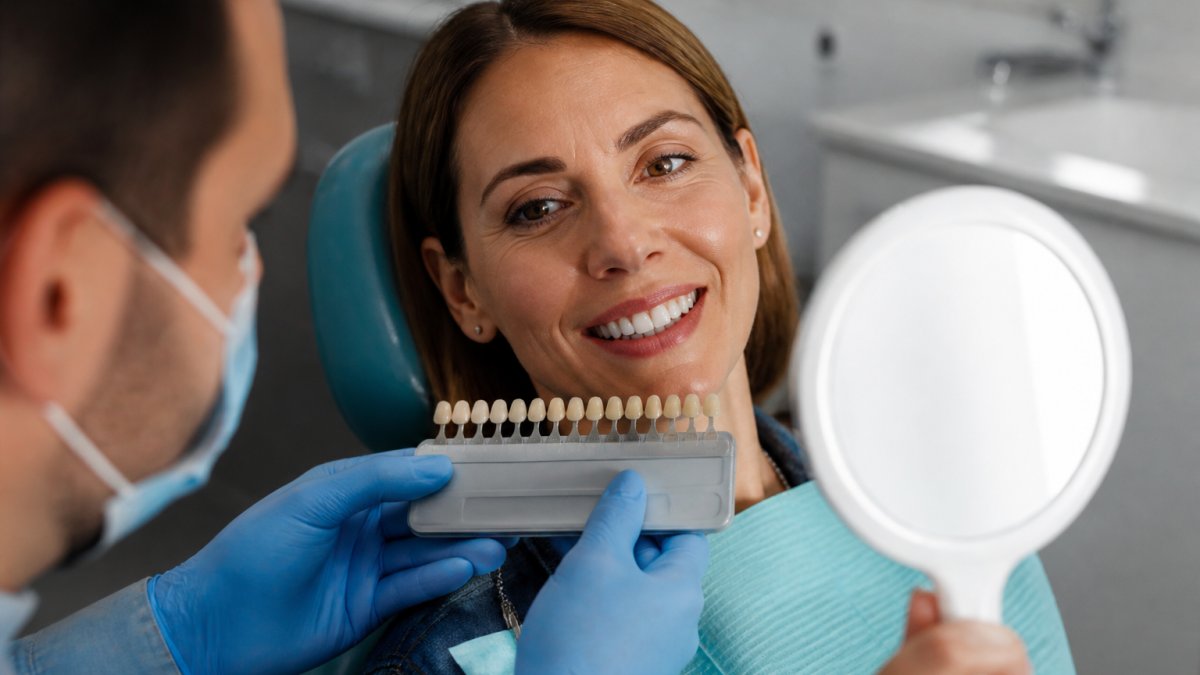
If you want to picture the outcome before committing, a smile view preview helps you visualise the result while you decide between veneer types.
The Veneer Treatment Process, Step by Step
Treatment follows a clear sequence, and knowing it in advance removes much of the anxiety. Here is the veneer treatment process we follow.

- Consultation and cosmetic examination to assess suitability and discuss goals.
- Treatment plan covering which teeth, which material, and expected outcomes.
- Tooth preparation, minimal for composite and more involved for porcelain.
- Impressions or digital scans to build your custom veneers.
- Trial fitting to check fit, shade, and appearance.
- Bonding the veneers securely to the tooth surface.
- Review appointment to check comfort and bite.
A common mistake is rushing to book before the examination. Suitability and gum health decide everything that follows.
What Dental Veneers Cost and What Changes the Price
There is no single dental veneers cost, but that does not mean you should budget blind. A single tooth can be done; a full smile makeover across ten upper teeth will cost proportionally more. Your written treatment plan is the only figure that matters.
Several factors move the per-tooth fee:
- Material: composite is cheaper per tooth but may need replacing sooner; porcelain costs more upfront but often lasts longer.
- Number of teeth: one veneer is a simple job; a full mouth case involves more planning, lab work, and chair time.
- Preparatory work: if you need restorative dentistry, gum treatment, or a night guard first, that adds to the total.
- Lab and clinician skill: a natural, matched finish takes time and expertise, and that is reflected in the fee.
- Consultation and diagnostics: some clinics charge separately for the cosmetic examination, x-rays, or digital scans; ask whether these are included. (Source: NHS dental statistics)
Beyond the veneers themselves, budget for:
- Repairs: composite can often be added to and polished; porcelain chips usually mean replacement of that unit.
- Replacement cycle: porcelain may last 10-15 years with good care; composite often needs refresh sooner.
- Payment options: many private clinics offer staged payments or finance plans, ask before you book.
The best way to budget is to book a consultation for a written treatment plan that itemises every cost. A fee guide based on your actual case beats any online estimate, and a reputable clinic will not pressure you to commit on the day.
Ask for the quote in writing, broken down by tooth, material, and any preparatory treatment. That document is your protection if the plan changes.
How Long Do Veneers Last and How to Care for Them
How long do veneers last depends on material and care. Porcelain generally outlasts composite, but both reward good dental hygiene. Treat them like your natural teeth and they serve you well.
Care essentials:
- Brush twice daily and clean between teeth
- Keep regular hygienist appointments
- Avoid biting nails, pens, or hard objects
- Wear a night guard if you grind
- Limit heavy staining foods and drinks
Aftercare is where most problems are prevented. Chips and wear are usually the result of neglect or grinding, not the veneer itself. Repairs are often possible, especially with composite.
Risks, Tooth Preparation and Whether Veneers Are Reversible
Veneers are a well-established treatment, but they are not risk-free. The single most important fact to understand is tooth preparation: to bond a veneer flush with the smile, the clinician usually removes a thin layer of enamel from the front of the tooth. For porcelain veneers this is typically 0.3-0.5 mm and is permanent, enamel does not grow back. For composite veneers, preparation is often minimal or none, which is why composite is frequently described as reversible.
That difference drives most of the trade-offs:
- Sensitivity: after preparation, teeth can feel sensitive to hot and cold for a few days or weeks. This usually settles, but it is a real short-term effect.
- Chipping and debonding: porcelain can chip if struck; composite can wear or lift at the edges. Both are repairable in many cases, but porcelain chips often mean replacing the unit.
- Gum irritation: if the margin between veneer and gum is not kept clean, plaque can accumulate and irritate the gum. Good dental hygiene and regular hygienist visits prevent this.
- Replacement cycle: no veneer lasts forever. Porcelain may last 10-15 years with care; composite often needs refreshing sooner.
- Bite and grinding: if you grind your teeth, a night guard is essential, otherwise the veneers take the force.
Reversibility is the key decision point. Composite veneers can often be removed or adjusted because little or no enamel is removed. Porcelain veneers are usually irreversible because the enamel is gone. If you are worried about permanent work, or are correcting poor cosmetic treatment done elsewhere, read our guide to correcting bad dental cosmetic work before deciding. A dental consultation is the right place to weigh these trade-offs for your own teeth, ask specifically how much enamel will be removed and what happens if you want them off later.
If a clinic cannot tell you how much enamel will be removed, or whether the work is reversible, do not proceed. That is a basic part of informed consent.
Book a Veneer Consultation at U Smile Dental
Getting the right result starts with an honest assessment, not a sales pitch. U Smile Dental has been a private clinic in Luton since 2009, CQC registered, with digital x-rays and a comfortable, clean surgery. Our team speaks English, German, Spanish, Persian, and Romanian, so you can explain exactly what you want. If you have been unhappy with cosmetic work done elsewhere, we will tell you plainly what can be corrected and how.
Ready to take the next step? Contact us to arrange your veneer consultation and get a clear, personalised treatment plan.
Frequently Asked Questions
Do you get veneers on the NHS?
Veneers are almost always classed as cosmetic treatment, so they are not routinely available on the NHS. NHS dentistry focuses on protecting and restoring oral health, which means a veneer is only likely to be considered where there is a clear clinical need, such as a damaged tooth. Most people choose private dental veneers to improve the shape, colour or alignment of their smile. Ask your dentist during a consultation whether your case has any NHS route or whether private treatment is the realistic option.
What is the 4-8-10 rule for veneers?
The 4-8-10 rule is a rough guide some clinicians use when planning a smile: the two upper central incisors may be around 10 mm long, the lateral incisors around 8 mm and the canines around 4 mm longer than the laterals. It is only a starting point for proportions, not a fixed standard. Your own tooth size, face shape and bite decide the final design, which is why a cosmetic examination and a discussion about your treatment plan come before any preparation.
Are composite or porcelain veneers right for me?
It depends on your goals and budget. Composite veneers are built up directly on the tooth, usually need little or no drilling and can often be repaired, which suits people who want a quicker, lower-cost option. Porcelain veneers are made in a laboratory, resist staining well and can look very natural, but they cost more and typically involve more tooth preparation. Your suitability also depends on gum health, enamel thickness and whether you grind your teeth. A consultation will confirm which type fits your case.
How long does it take to get dental veneers?
Composite veneers can sometimes be completed in a single longer appointment, while porcelain veneers usually need two or three visits: a consultation, a preparation and impression appointment, then fitting. The veneer treatment process often spans a few weeks because the laboratory needs time to make the porcelain. Your dentist will give you a realistic timeline after assessing your teeth, and you can ask for a written treatment plan with the stages and fees before you commit.
The real challenge with veneers is not choosing a material; it is finding a clinician who will assess your teeth honestly and explain the trade-offs before any enamel is touched. At U Smile Dental, we combine a thorough cosmetic examination, digital x-rays, and a written treatment plan so you can decide with confidence. Get started with U Smile Dental and book your consultation today.
